San Marcos Fortress: History, Tours, and Itineraries from San Sebastián
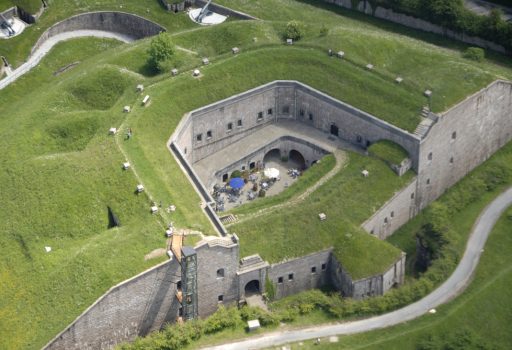
In the municipality of Rentería, ten kilometers from San Sebastián, there is an old military fort with unique views: the San Marcos Fortress. The sea and the mountains merge at this late 19th-century military fortress, whose observation deck offers the most spectacular panoramic view in the area. How do you get there, what is the fort’s history, what guided tours are available, and what are the access routes? We’ve got the answers.
History of San Marcos Fortress
The San Marcos Fortress is an old military fortress. It was inaugurated in 1888 at the summit of Mount Bezarain, within the municipality of Rentería, but it was never actually used as a defensive fortress: no battles were ever fought there. By the time it was inaugurated, the period of constant warfare in northern Spain during the 19th century had come to an end.
It was built during the reign of María Cristina of Habsburg-Lorraine, at a time when—although the Belle Époque of San Sebastián was already on the horizon (that era when San Sebastián served as the summer resort for the Spanish monarchy and nobility)—a climate of war still persisted in the country, and efforts were being made to quell potential Carlist uprisings and foreign invasions.
Against this backdrop, the San Marcos Fortress—a structure designed for war—was inaugurated at the same time as such festive buildings as the San Sebastián Casino (1887), now the City Hall, and the Miramar Palace (1888), the summer residence of Queen María Cristina.
Why were buildings designed for celebration and others for warfare being constructed at the same time?
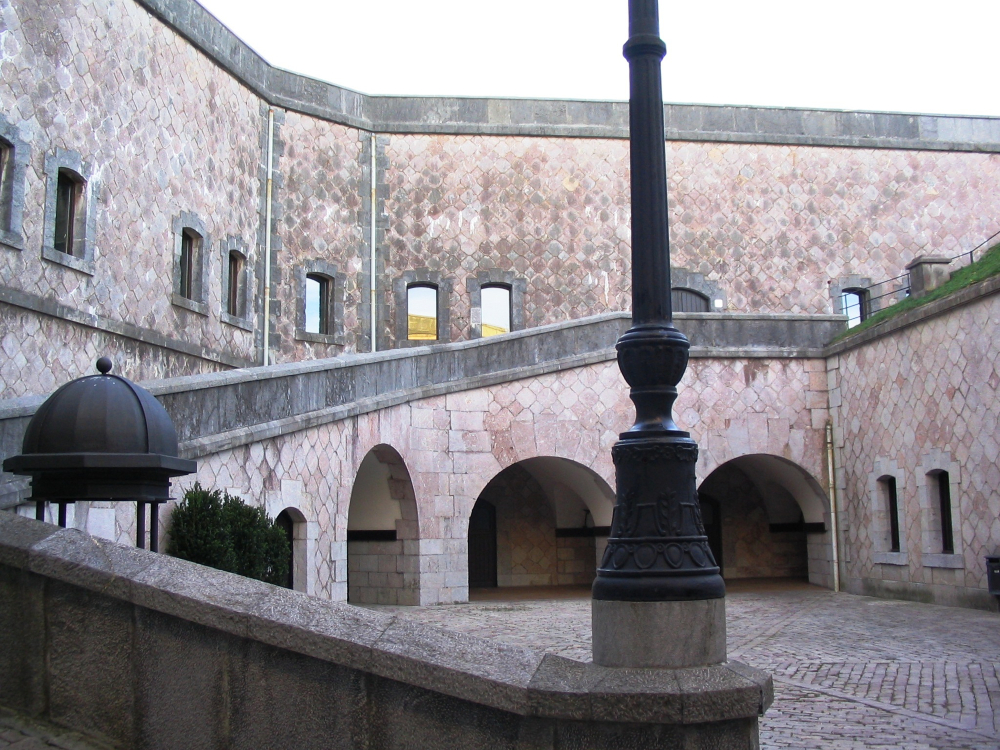
Historical context: Why was San Marcos Fortress built?
Although San Sebastián would experience decades of splendor beginning in the late 19th century, it had emerged from decades of conflict. On the one hand, in 1813, during Napoleon’s French invasion, British and Portuguese troops burned San Sebastián to liberate it. On the other hand, between 1833 and 1876, three Carlist Wars took place, during which liberals loyal to Queen Isabella II fought against the Carlist absolutists who supported Charles IV.
Thus, defending against potential invasions by foreign powers (namely, France and England) and attacks by the Carlists (namely, San Sebastián and the coastline were liberal municipalities, although the interior of the province of Guipúzcoa was dominated by the Carlists) was a central concern of the era.
So much so that the San Marcos Fortress is one of the military structures built in Guipúzcoa in the 19th century as part ofa defensive architecture plan. This plan included a series of bunkers built in the middle of the last century as part of the Pyrenean Defense Organization, also known as Line P (*1).
This P Line was planned to have eight forts, several auxiliary batteries, and an entire network of communications and support services designed to bolster the defense of the territory. However, only three were completed: San Marcos Fortress, the small Fort Txoritokieta (on the neighboring hill of the same name), and the most powerful fortification, Fort Nuestra Señora de Guadalupe, located on Mount Jaizkibel, from which the sea route from France into Spain could be controlled.
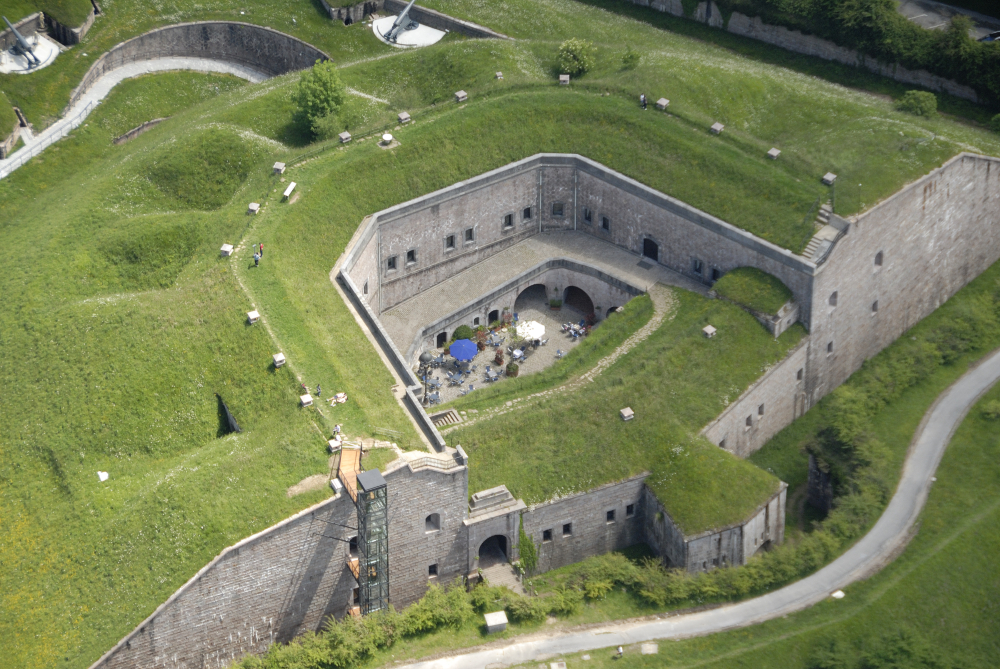
Strategic Location: Why Was It Built in Rentería?
What better place to defend against potential foreign attacks than a location from which one can see the region’s three sea entrances (the bays of La Concha, Pasajes, and Txingudi), the border with France, and the inland mountains of the province of Guipúzcoa? None.
That is why the Fort of San Marcos is situated atop Mount Bezarain, at an elevation of 360 meters, in the municipality of Rentería, which belongs to the Oarsoaldea region. Because from that location, the views are strategically important. All entry points to the area—by sea and land—can be monitored. In fact, even today, the site’s strategic location is immediately apparent from the top of the fort.
From there, you can see the entire southwestern coast of France all the way to Les Landes, as well as the entire coast of Gipuzkoa toward Deba. And on the side facing away from the sea, Peñas de Aia and Mount Larrun dominate the panoramic view of the mountain ranges that border the region’s valley.
In addition to its location, the building’s layout is also significant, and it stands as one of the finest examples of polygonal fortifications in the Basque Country. Its main structure covers an area of 12,500 m2 and is a crucial part of the rich historical heritage of northeastern Gipuzkoa (*1).
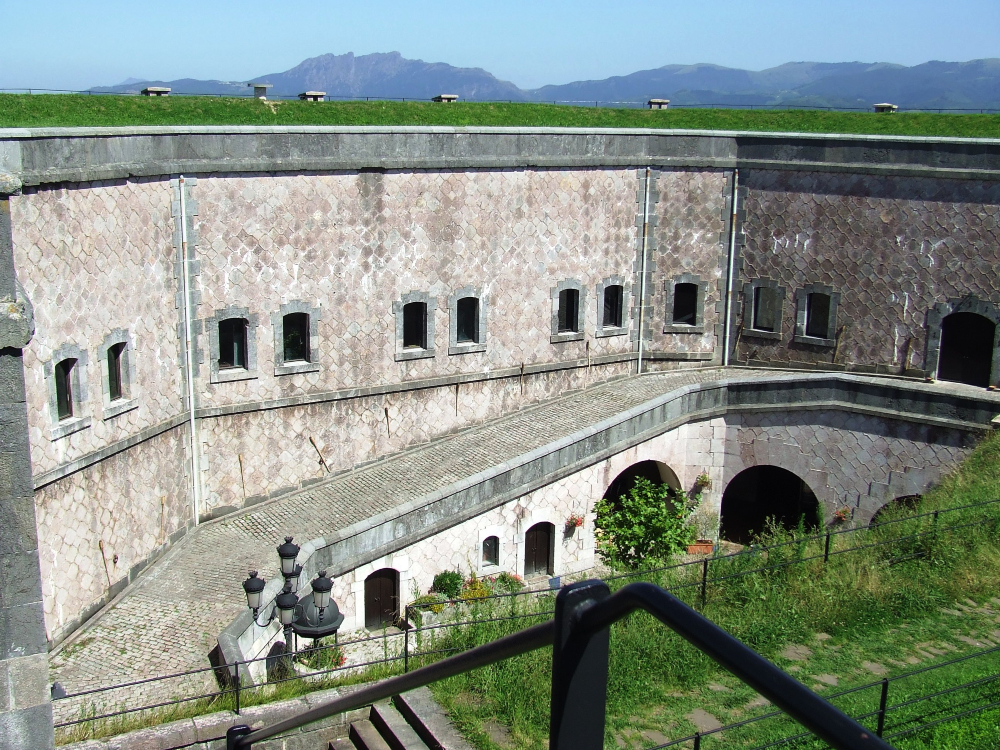
What role did the San Marcos Fortress play?
Fort San Marcos was built as part of that defensive plan against France and the Carlists in the late 19th century. The Pyrenees Defense System included, in addition to San Marcos Fortress (1888), Fort Txoritokieta (1890), located on an adjacent hill, and Fort Guadalupe (1900), located on Mount Jaizkibel, overlooking the border town of Fuenterrabía.
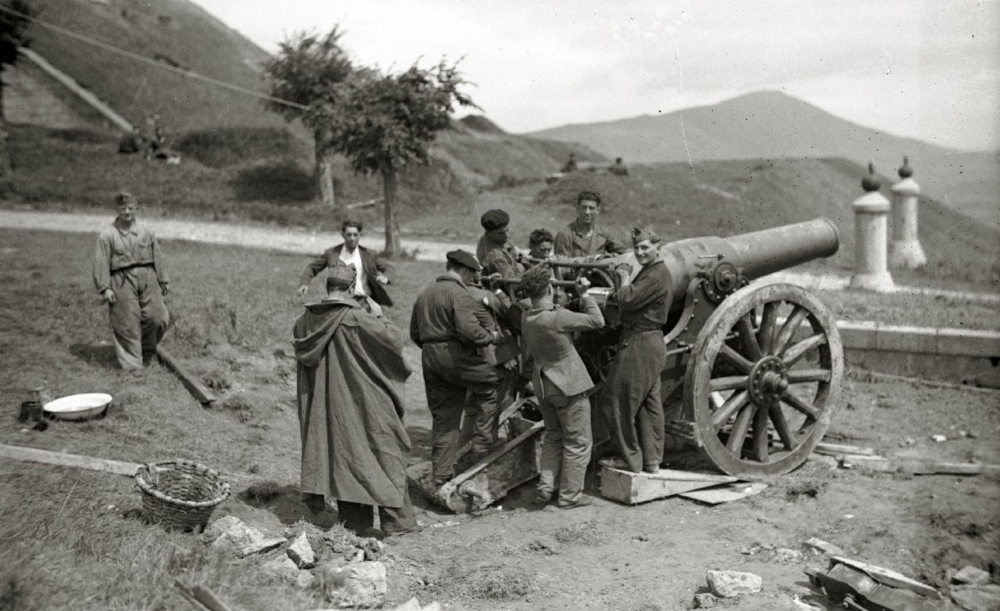
However, despite its strategic location and the armaments with which the fort was equipped (primarily cannons and howitzers), San Marcos Fortress was never operational. The main reason is that it was a defensive fortress that became obsolete as soon as it was inaugurated, due to rapid military advances. In 1910, military aviation was introduced in Spain, and the fort’s design was not intended to withstand air attacks. Consequently, its military function became obsolete before it even began.
From a refuge for Republicans during the Civil War to a prison for Republicans during the Franco regime
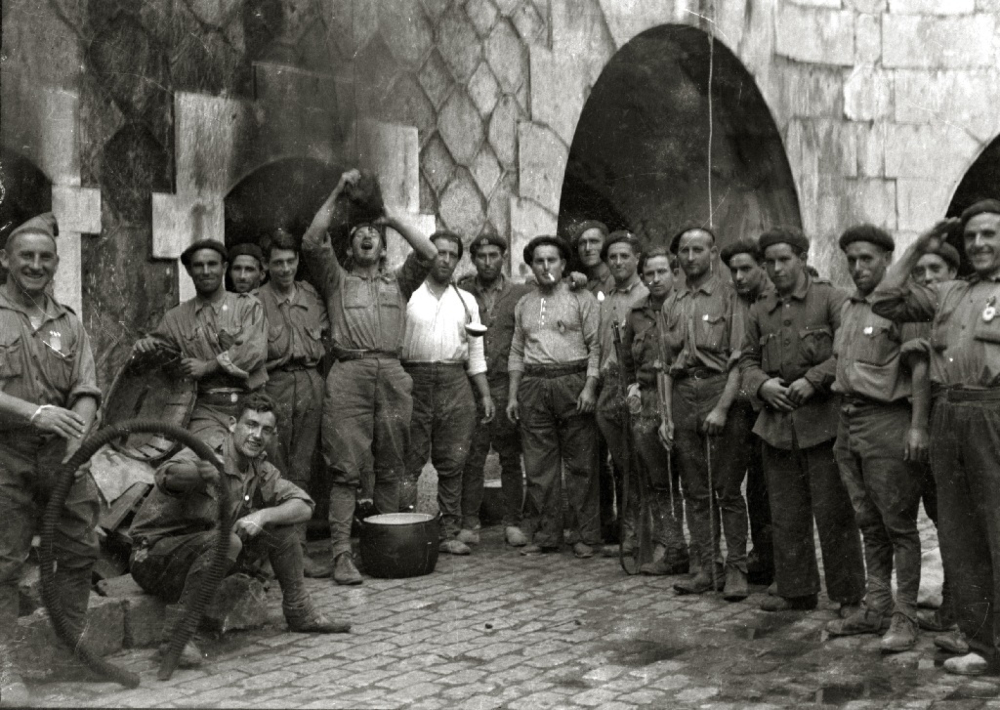
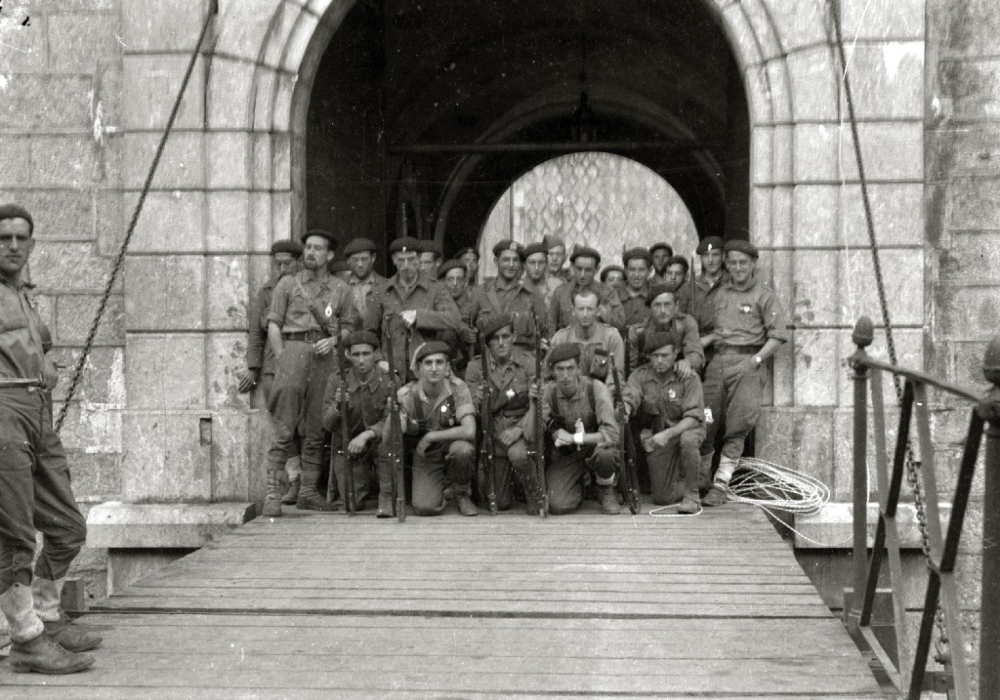
The San Marcos Fortress therefore never came to fulfill the defensive functions for which it was designed. As a result, it fell into disuse and served various purposes over the following decades. First, in 1936, with the outbreak of the Spanish Civil War, members of the Republican side took refuge in the fort. Later, after the war ended, during the Franco regime, the dictatorship used the facilities as a prison, specifically for holding Republicans.
After that, since the fort belonged to the Ministry of Defense, its facilities were used for military training exercises (at the time, mandatory) until the 1970s. Two decades later, in 1992, the Rentería City Council purchased the fort from the Ministry of Defense, and that is when restoration work began to transform the former defensive fortress into the historical museum it is today.
Visit the San Marcos Fortress
San Marcos Fortress is open to the public for six months of the year. It currently operates as a museum for half the year: it opens during Holy Week and remains open for the following six months. It has a visitor reception desk and offers guided tours in Spanish and Basque, lasting around an hour, during which museum staff explain the history and the most significant features of the fort. All of this is free of charge.
In most areas, the military activity for which the site was originally designed has been recreated through the installation of replicas. Machine guns, cannons, howitzers, soldiers and artillery are just some of the props used by the museum to help visitors immerse themselves in the setting. In addition, information panels are displayed throughout the site, available in several languages, which explain the tour.
Opening times for San Marcos Fort
The museum’s opening hours vary depending on the month. During the summer months, it is open on Wednesdays, Thursdays, Fridays, Saturdays and Sundays; during April, May and September, it is open only at weekends, on public holidays and during long weekends.
It is important to remember that the feast day of St Mark is 25 April, and that the Sunday closest to that date sees the Pilgrimage of St Mark, which brings together hundreds of people who make the pilgrimage to the fort.
Opening hours in April, May and September:
- Days: open on Saturdays, Sundays, public holidays and long weekends
- Opening hours: 10.00–14.00 and 16.00–18.00
Guided tour times:
- Basque: at 11.00 and 16.00
- Spanish: at 13.00 and 17.00
As for the guided tours, which are free of charge, there is one session in the morning and another in the afternoon; you must book your tour in advance by calling 943 44 96 38 or emailing turismoa@errenteria.eus.
Routes from San Sebastián to San Marcos Fortress
San Marcos Fort is located in a stunning natural setting: the Lau Haizeta Natural Park. Perched atop Mount Bezarain, it can be reached on foot or by bike via trails that wind through unspoiled nature—an experience in itself.
You can reach it on foot or by bike from two locations: the Garbera shopping center in San Sebastián; and the Beraun neighborhood in Rentería.
Route to San Marcos Fortress from San Sebastián
This is a loop trail, and San Marcos Fortress is right in the middle of the route, so it can be the perfect halfway stop to recharge. Plus, next to the fort there are green spaces with tables and picnic areas where you can eat.
- Distance: 10.5 km
- Time: 3 to 4 hours (round trip)
- Route: loop
- Start and finish: Garbera Shopping Center in San Sebastián, in the Intxaurrondo neighborhood
Directions to San Marcos Fortress from Rentería
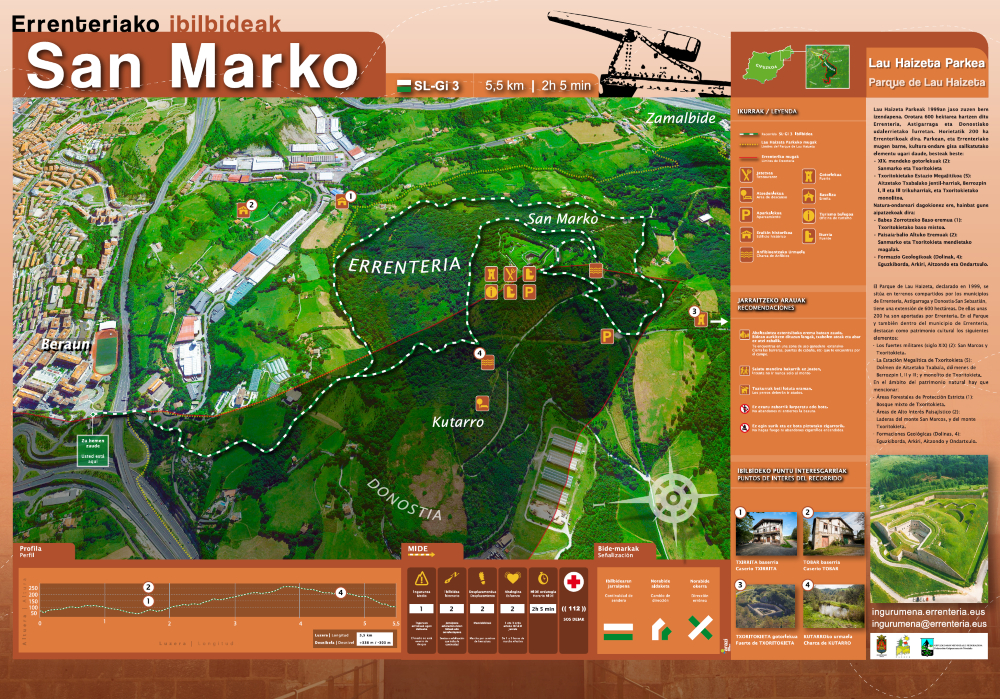
This is the shortest and easiest route to reach San Marcos Fortress on foot. It starts in the Beraun neighborhood of Rentería, which can be reached by public transportation (the E5 bus, departing from Plaza Guipúzcoa).
- Distance: 5.5 km
- Time: 2 hours (round trip)
- Route: loop
- Start and finish: the roundabout next to Bizarain School, in the Beraun neighborhood of Rentería
- Marked trail: the signs are SL-GI 3 (white and green markings)
How to get to San Marcos Fortress
You can reach San Marcos Fortress on foot or by bike from the Beraun neighborhood in Rentería, or from the Garbera Shopping Center in the Intxaurrondo neighborhood of San Sebastián, following the two routes mentioned above. You can also get there by car, and there is a free parking lot for visitors at the fort itself. The easiest route is from the Beraun neighborhood in Rentería.
References
- Sáez García, Juan Antonio (2018) EL FUERTE DE SAN MARCOS EN 150 PALABRAS
- Fuente de fotos: Departamento de Turismo de Oarsoaldea

A journalist with over 20 years of experience in the media, specializing in creative storytelling and informative content. Through Go Local, she connects with the people, places, and events that matter in San Sebastián, reporting with journalistic rigor on the milestones that shape the city’s identity.