Battle of Lugaritz: Key points of a historic confrontation
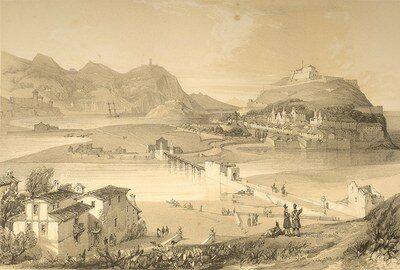
1836. Guipuzcoa: a province divided between Carlists and Liberals. Supporters of the Old Regime and King Carlos V spread throughout rural areas. In San Sebastián, the bourgeoisie clamoured for industrialisation and the appointment of Queen Isabel II to cultivate liberal ideas. Tradition and progress clashed on the battlefield. And in this context, the Alto de Aiete in San Sebastián became a key location, where the Battle of Lugaritz changed the course of history. In this post, we discuss the key points of a historic confrontation.
At Go Local, we offer a wide variety of private and group tours by bike or on foot. One of our most fascinating tours, which tells the story of the battles that took place in our city, is the military tour: San Sebastián at War.
Context: First Carlist War (1833–1839)
In 1833, King Fernando VII died, and the succession to the Spanish throne triggered the First Carlist War between Carlists and Liberals. The former defended the appointment of Fernando VII’s brother, Carlos V. The latter supported the appointment of Fernando VII’s daughter, Isabel II.
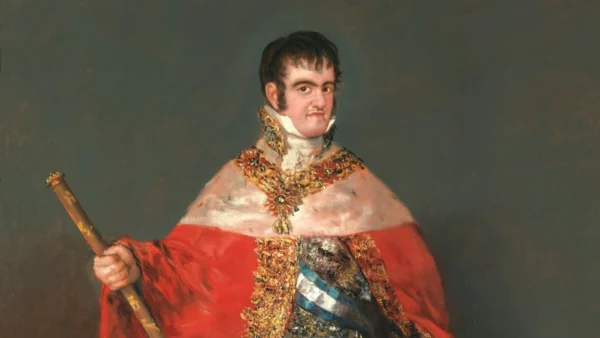
Fernando VII. Source: La Razón
But why did succession to the throne at that time give rise to ambiguities? Because of the Salic Law and the Pragmatic Sanction of 1830. Since 1713, succession to the throne in Spain had been governed by a regulation of monarchical succession in favour of men (Salic Law). In 1830, King Fernando VII, who had no sons, approved the Pragmatic Sanction so that his eldest daughter, Isabel, would be the heir to the crown.
Trigger for the First Carlist War: the succession to the throne of Fernando VII
This was the source of discord: the absolutists did not accept the Pragmatic Sanction and defended the appointment of the king’s brother, Carlos V, under the Salic Law. Meanwhile, opponents of the Old Regime upheld women’s right to the throne, as Fernando VII had stated in the Pragmatic Sanction, and fought for the appointment of Isabel II and the regency of Maria Cristina until Isabel came of age (the heiress was two years old when her father died).
In this context, the succession to the throne of Fernando VII embodied not only the confrontation between supporters of two different successors, but also the conflict between two ways of understanding the world. The tradition of the Old Regime (Carlists) versus the progress of the French Revolution (liberals or Isabelinos).
Carlists: Carlos V, king, Old Regime and religion
The Carlists defended the Old Regime. This was a system in which power was held by an absolute monarch, society was divided into estates (nobility, clergy and peasantry), and the economy was based on feudalism. During the First Carlist War, those in favour of prolonging this model supported Carlos V, brother of Fernando VII, and were led on the battlefield by Tomás de Zumalacarregui.
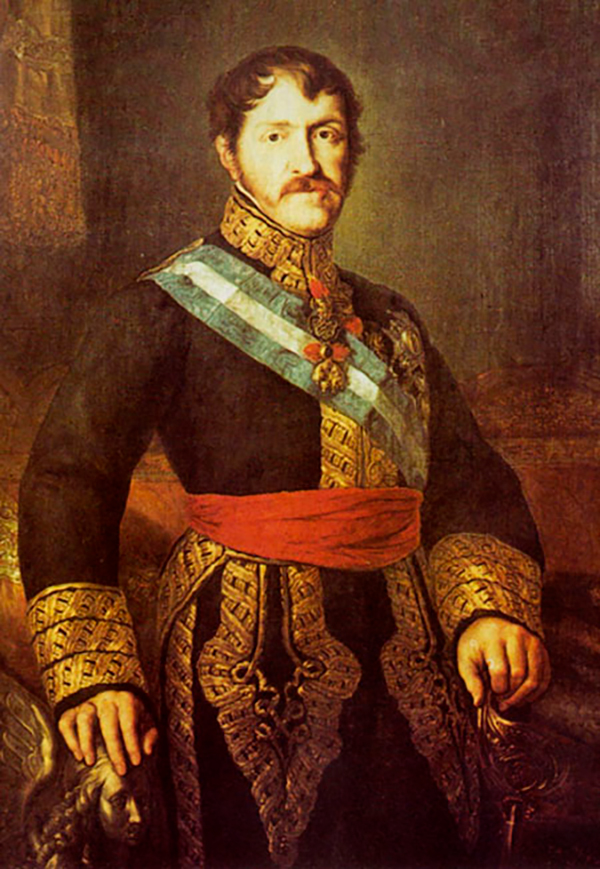
Carlos María Isidro de Borbón. Source: Biblioteca Virtual Miguel de Cervantes
Liberals: Isabel II, queen, constitution and modernisation
The liberals defended the succession to the throne of Isabel II, daughter of Fernando VII, and the regency of María Cristina until the princess came of age. Influenced by the liberal ideas of the French Revolution, they defended a state of citizens with rights and duties, embraced the constitution signed in San Sebastian in 1831 (that constitution ratified in Cadiz in 1836), and supported the plundering of church property to finance the industrialisation of the bourgeoisie based in San Sebastian, as the French revolutionary troops had done against Napoleon’s empire a couple of decades earlier. They did not accept the fueros (special privileges) as they stood and considered it necessary to abolish or modify them.
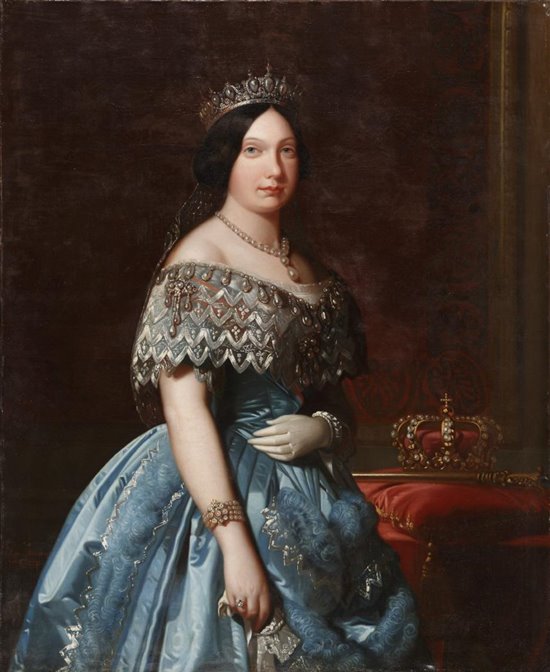
María Isabel Luisa de Borbón. Source: National Geographic
Led by General Baldomero Espartero, they have the support of the United Kingdom, France and Portugal, according to the Treaty of the Quadruple Alliance, signed in London on 22 April 1834, in favour of the queen.
The fueros: a decisive factor during the First Carlist War in the Basque Country and Navarre
The fueros regime was an exceptional system of government for the Basque Country and Navarre, which gave these territories greater autonomy than other Spanish provinces. The arming of municipalities and the fueros’ own armed forces were some of the peculiarities of this form of governance. In 1834, a Royal Statute was approved that eliminated much of the fueros regime: a regulation that was very well received by the liberals of San Sebastián.
In the interior of Guipúzcoa, in rural areas, the Church had great influence and the peasants defended tradition, religion and the fueros. In San Sebastian, on the other hand, the city’s bourgeoisie proclaimed industrialisation, the constitution and the abolition or modification of the fueros. The Church and the peasants defended the Old Regime, while the bourgeoisie supported a new order.
The situation in San Sebastián in 1836: prelude to the Battle of Lugaritz
The Carlist War had been raging in Spain since 1833, and in May 1836 the situation in San Sebastian was as follows. The Carlists already controlled Vizcaya and Alava, and had also conquered the inland areas of Guipuzcoa. San Sebastian, however, remained resistant. The Carlists were unable to drive out the population of San Sebastian, who were supported by the British, so Maroto’s troops (Zumalacarregui had died after taking the town of Bilbao in 1835) imposed a Carlist blockade on the city.
Around 3.000 defenders of Carlos V isolated the city. On one side, they conquered the right bank of the Urumea (the current Gros neighbourhood) and razed the Convent of San Francisco, where the English were quartered. On the other hand, they destroyed the wooden bridge connecting the two banks of the estuary so that the liberals would be blocked in the city and unable to leave. In addition, they had houses with ammunition prepared in the heights of Aiete, thus controlling the area from the Old Town to the left bank of the Urumea River (*3).
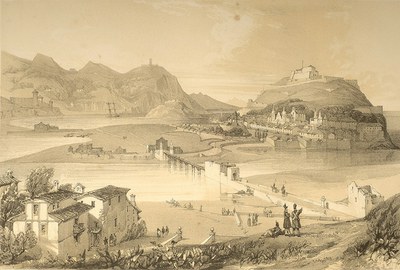
Source: Zumalakarregi Museoa
The only possible means of communication with the city (now the Old Town of San Sebastian) was by sea, and the British took advantage of this route to join forces with the people of San Sebastián from Santander. In May 1836, the liberal allies were already planning their attack on the heights of Aiete, which would culminate in the Battle of Lugaritz.
The British Auxiliary Legion and George-Lacy Evans: essential support for the Liberal victory in the Battle of Lugaritz
The British Auxiliary Legion was formed in 1835 and authorised the British to enlist under the flag of Queen Isabel II. Lieutenant Colonel George-Lacy Evans led this legion made up of volunteers from the British army, who began arriving in San Sebastian on transport ships from British ports in August 1835 (*2).
The members of the British Auxiliary Legion arrived without any military training and were given ‘A Luminous Guide’: a guide to the customs, geography and language of the Basque Country, which even included a short Basque-English-Spanish dictionary among its pages.
In April 1836, British officers arrived from Santander on the steamships Isabel Segunda and Reina Gobernadora. In Cantabria, they had prepared a plan to attack the Carlist troops besieging San Sebastián from the heights of Aiete, and they disembarked in Donosti with the intention of carrying it out.
Mount Aiete and the Battle of Lugaritz: Liberal victory in San Sebastian
With the British Auxiliary Legion in the city, senior officers met at Urgull Castle on 4 May and decided to attack. On 5 May 1836, the British battalions, reinforced by two Spanish battalions and the txapelgorris, assembled in the Plaza de la Constitucion. More than 6,500 soldiers marched in three columns towards the heights of Aiete, and at four o’clock in the morning on 6 May 1836, the battle began.
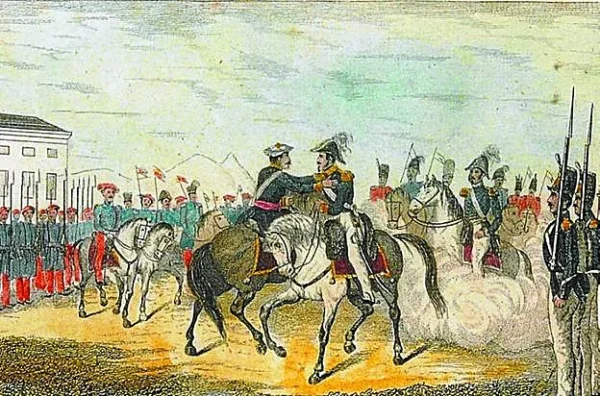
Source: El Diario Vasco
The Annals of the First Carlist War in San Sebastian, compiled by Fermin Muñoz Echabeguren (*1), record that what happened over the following three days in the fields opposite La Concha was something that the inhabitants of San Sebastian would not be able to forget for a long time: ‘a deplorable and horrific spectacle’.
Liberal troops leave San Sebastian for the heights of Aiete to attack the Carlists
“Today has been one of the most glorious days for the Queen’s forces during the current conflict. General Evans set out at dawn with the aim of dislodging the enemy from the positions they occupied in front of this square. The fighting began on the San Bartolome hill, before reaching Lugariz, in the direction of the town of Hernani, and on that day other fires broke out.” (*1)
This is how 5 May 1836 is recounted in the city’s annals. A chronicle that highlights the participation of the San Sebastian neighbourhood in assisting the wounded on the battlefield and transporting ammunition. It highlights the support of the women who ‘left the square, generously giving bread, wine and brandy to the returning soldiers’.
If you want to explore San Sebastian and the city’s historic and military sites at your own pace, you also have the option of renting your own electric bike to create your own tour of the city. You can reserve a bike for anywhere from 1 hour to more than 4 hours.
Retreat of the Carlists to the hamlet of Lugaritz
The Liberal troops forced the Carlists from the heights of Aiete to retreat to Puyo, Munto, and finally Lugaritz. Espartero’s men barricaded themselves there, where they were attacked and defeated by troops led by Lacy Evans. During the battle, Carlista General Sagastibelza was killed, and San Sebastian was finally freed from the total blockade imposed by the Carlists.
Consequences of the Battle of Lugaritz
Although the Battle of Lugaritz alleviated the isolation to which the Carlists had subjected San Sebastian, the blockade of the city continued to be fought in the following years. A year later, the Battle of Oriamendi was decisive for the Liberals, who, supported by the Royal Expedition, managed to conquer Hernani. That was it: San Sebastian was liberated.
The First Carlist War continued until 1839, when peace was sealed during the Embrace of Bergara. An agreement was reached between the liberal general Espartero and the carlist general Maroto, whereby the carlistos recognised Queen Isabel II in exchange for Espartero proposing to the Cortes that the Basque-Navarrese fueros (special privileges) be preserved.
REFERENCES
1.Muñoz Echaguren, Fermín (2001) Annals of the First Carlist War in San Sebastián. How the war was experienced in the city: Publications of the Dr. Camino Institute of Donostiarra History, Kutxa Foundation.
2.De Paula García, Francisco (2018) The Romantics of Urgull. Chronicle of William Tupper and Oliver de Lancey in Donostia-San Sebastián: Delegation to the Court of the R.S.B.A.P.
3. Aragón Ruano, Álvaro-Echeberria Ayllón, Iker (2017) Summary of the History of Gipuzkoa: Provincial Council of Gipuzkoa.

A journalist with over 20 years of experience in the media, specializing in creative storytelling and informative content. Through Go Local, she connects with the people, places, and events that matter in San Sebastián, reporting with journalistic rigor on the milestones that shape the city’s identity.
Related tours
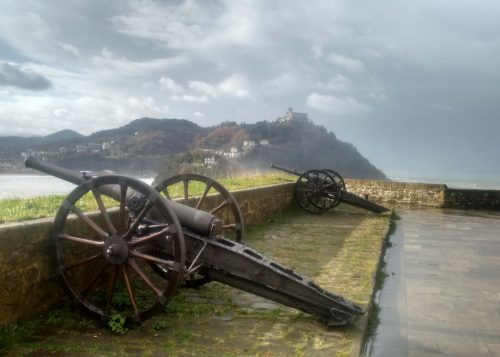
 Private Walking Tour
San Sebastian at War Tour
On this guided tour you will learn about the history of San Sebastian through the wars and conflicts that the city has suffered throughout its history, from the Middle Ages to the present day. All this with a marked historical rigour, but without forgetting that the aim is to learn about the history of the city in the most entertaining and playful way possible.
- When Everyday**
- Hour 10:00am & 3:00pm
- Duration 3 hrs
- Language/s Esp / Eus / Eng / Fran
- Price
*Minimum possible price per person, varies depending on the number of people on the tour. If you would like to know more, please do not hesitate to contact us.