Santa Clara Island
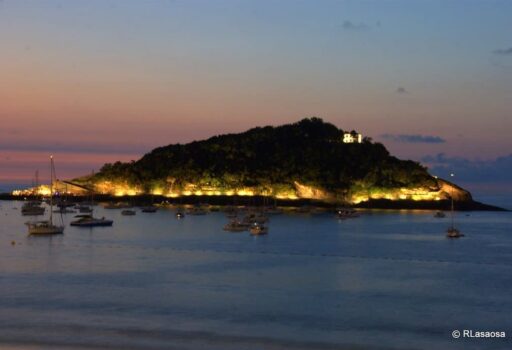
If you have ever been to San Sebastian, you have probably visited La Concha Bay, where you will have noticed that there is an island in the middle, right at the entrance. As you probably know, this is Santa Clara Island, a very special place that we are going to tell you a little bit about below.
The island of San Sebastian
The island of Santa Clara is, as we have already mentioned, at the entrance to La Concha Bay. It provides natural protection for the bay, making it very safe from waves and therefore a perfect place for a port. In summer, the water warms up to almost 25º when it is very hot.
Today it is used exclusively for leisure, but before that it was used in many different ways.
Its strategic location made it the ideal place to locate the city’s defences in times of war, and its relative distance from the rest of the city was an advantage when it came to quarantining the sick. It was also used as a cemetery for non-Catholics who died in San Sebastian, housed a convent of Poor Clare nuns and, even earlier, a chapel dedicated, of course, to Saint Clare.
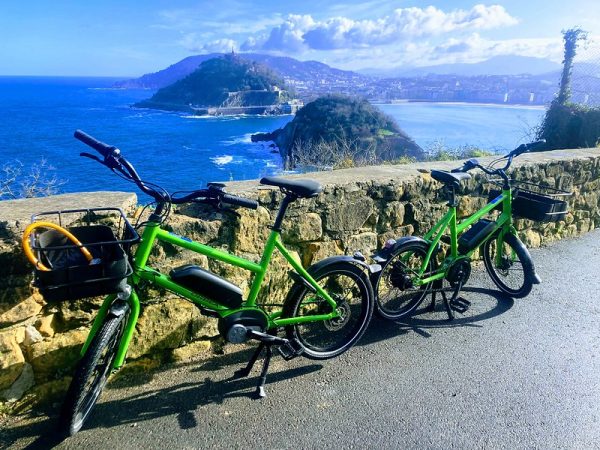
The island with our bikes in the foreground.
Hardly anything remains of these uses, and today the only buildings we see on the island are the lighthouse at the top and a beach bar next to the pier.
The beach bar is a fantastic place to eat or have a drink when visiting Santa Clara, which can be accessed from Easter to October by the island’s motorboats and all year round by canoe or similar. On the island, near the lighthouse, there are picnic tables, and when the tide goes out, there is a small cove where you can swim. In summer, the island is usually packed, especially with families and groups of teenagers looking for an alternative to going to the beach.
The lighthouse, although still in use, no longer houses the lighthouse keeper and his family, but rather the work of art Hondalea, created by Cristina Iglesias and installed here in 2021.
Hondalea
Hondalea is a representation of the seabed, of cliffs battered by waves when the sea is rough. It is a work that reflects the sound of the sea and its movement very well, although it is obviously artificial. The inspiration, however, is not far away, as just a few metres away, on the Paseo Nuevo, we can enjoy the force of the sea against the rocks. In any case, this is not easy to see in summer, so we can go to Hondalea to enjoy the experience, as the art installation is only open during the hottest months of the year.
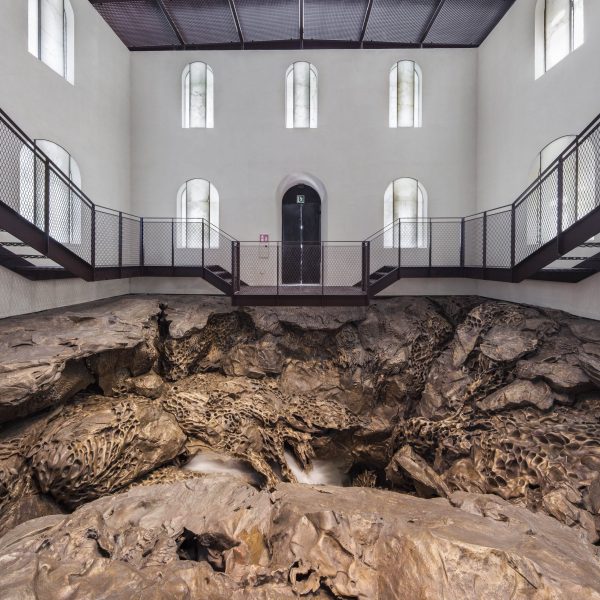
Hondalea
Flora and fauna of Santa Clara
But there is more to the island than just buildings and art. As a natural space, it is home to all kinds of plants, mainly tamarisk and sea fennel. And two animals in particular: seagulls and lizards.
There are around 100 pairs of yellow-legged gulls nesting on the north side of the island. Although they nest all year round, you have to be most careful with them in summer, when they have their young. These seagulls are also often seen on the beaches, keeping a sharp eye out for food, so you have to be careful when you’re having lunch, or they’ll steal your sandwich!
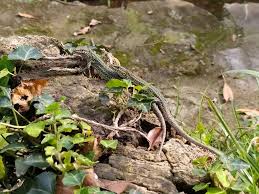
In any case, the most important animal on the island is the lizard. A subspecies of the common lizard, our lizard has evolved in isolation and without predators for millennia, so it is somewhat different. It is larger, has more vivid colours, but is just as fast. Its scientific name? Podarcis hispanicus sebastiani, because our lizard is endemic to San Sebastian! And that is why the island is protected: you cannot light fires, camp, or bring animals that could carry parasites or diseases that affect the lizard population. If you see one, which is easy on sunny days, consider yourself lucky, because you are seeing an animal that is unique in the world.

Hegoi has been a local guide in Go Local San Sebastian for almost 10 years. A local among tourists, who loves his profession and enjoys showing his hometown. He also plays a key role in the teams of Free Walking Tour and Bike Rental.