“Poteo” in San Sebastián: tradition, routes, and how to enjoy pintxos like a local
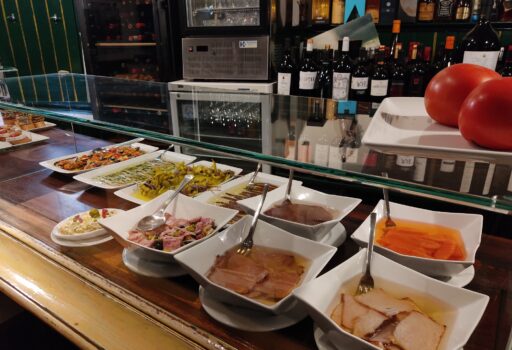
“Poteo” is the most deeply rooted social activity in the Basque Country. It involves going from one bar to another to have a glass of wine at each one. And in San Sebastián, few things are more enjoyable than socializing this way—moving from place to place with a glass in hand and sampling each bar’s culinary specialty. So here’s a guide to San Sebastian’s bar-hopping scene so you can enjoy pintxos like a true local.
What is “poteo” or “txikiteo”, that tradition so deeply rooted in Basque culture?
Going for a drink or ‘txikitear’ is one of the most deeply rooted social customs in Basque culture in general, and in the culture of San Sebastián in particular. Going from one bar to another in a ‘cuadrilla’ (as groups of friends are commonly known in the Basque Country) is part of the region’s popular heritage.
The term potear derives from pote, which is what wine glasses were commonly called, and refers to the activity of going from one bar to another to drink potes. It is also known as txikiteo, and refers to drinking small glasses of wine or beer. Txikito refers to wine, and zurito to small beers.
This nomadic way of socialising in bars is a hallmark of the region and forms part of the very essence of the people of San Sebastián. In other parts of Spain, it is more common to meet up at a bar or restaurant to get together with friends in a specific place. Not in San Sebastián.
In San Sebastián, we meet at a bar—the first one—and from there we move on to others. What’s more, we don’t sit down. Because the ‘poteo’ is enjoyed standing up, leaning on the bar or amidst the hustle and bustle of the street, with a drink in hand, and changing location with every sip.
You might be in the old town of San Sebastián or Bilbao, and you’ll see groups of friends walking from one bar to another. Well, those groups are out on a ‘poteo’. And age doesn’t matter, because poteo is a deeply rooted custom among both groups of pensioners and groups of young people. Although it’s true that the younger generations tend to go poteo and eat pintxos at the same time, whilst the veterans (and these groups are exclusively male), the classic txikiteros, limit poteo to just that: the drinks.
What is the origin of the Basque poteo?
The tradition of ‘poteo’ or ‘txikiteo’ dates back to the Industrial Revolution, from the second half of the 19th century onwards. As industrial activity began to develop in factories, blast furnaces and mines, and commercial and port activity grew, bars and taverns became meeting places for workers, traders and sailors.
At that time, people drank red wines from La Rioja and claret from Navarre (rosé wines). Beer and higher-quality wines (crianza wines from various designations of origin or white wines) arrived later.
But in the early days of the poteo, the drinks were not as important as the socialising itself. Because in those days, taverns were the place par excellence for establishing working and business relationships. They were also the place to catch up on the latest news when television did not yet exist.
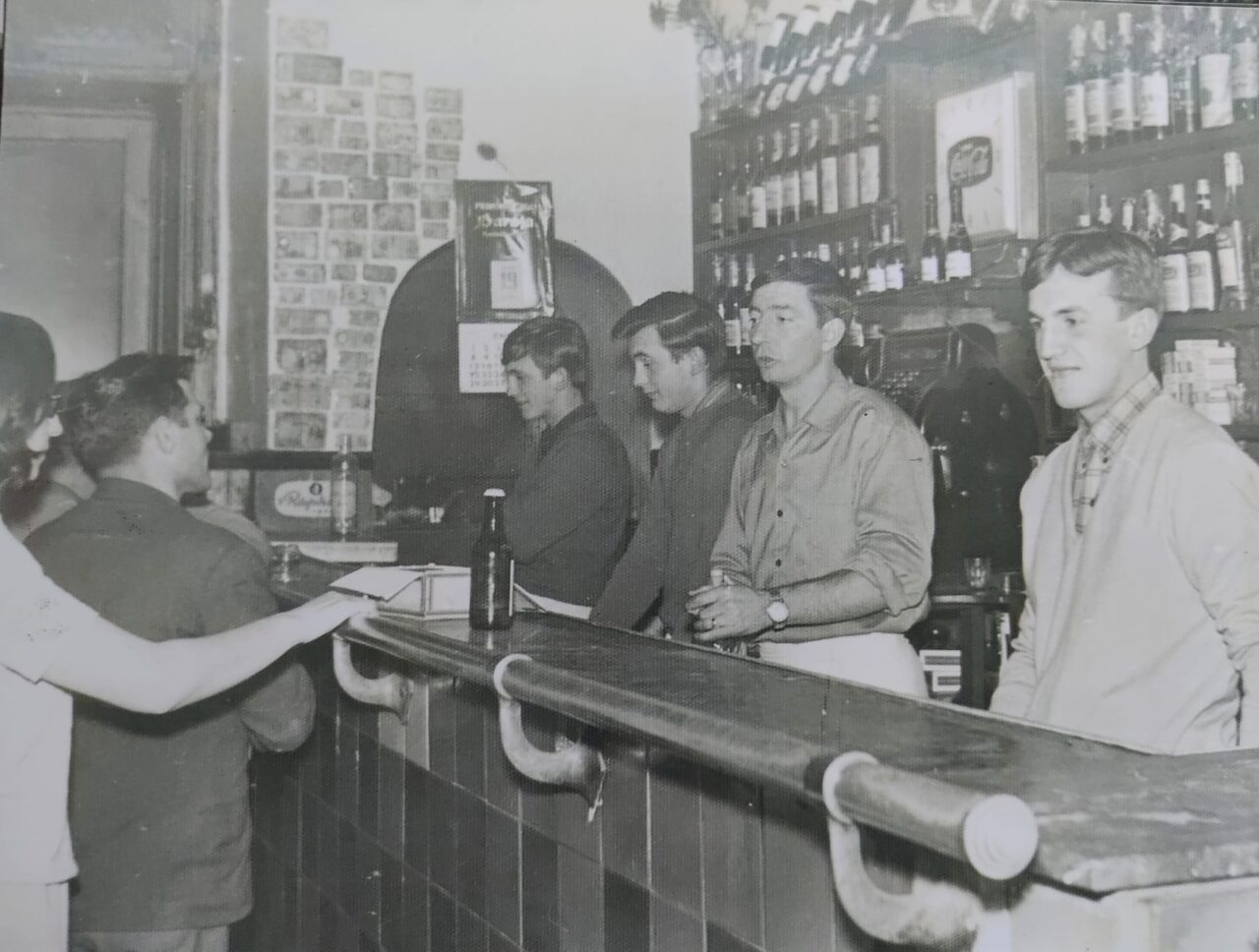
The evolution of the poteo
Whilst the poteo began as a way for workers to socialise and as a social activity designed to foster new business relationships, it was only later that it became something done in groups. From the mid-20th century onwards, the poteo had become an activity undertaken by groups of friends—always men—and was typically enjoyed before lunch and dinner.
Going out to sample a variety of wines in different bars within the same neighbourhood thus became an unbreakable ritual among the people of San Sebastián. The only exception was Sunday, a day set aside for vermouth – a tradition where the gathering was more of a family affair than a get-together with friends, and which took place after mass.
And it was over the last few decades that the tradition of ‘poteo’ gradually evolved into going out for pintxos. As bars began to offer miniature dishes and hot pintxos, the practice of visiting each bar to sample the house speciality gradually shaped the route of the poteo. A mini ham dish at Casa Alcalde, some mushrooms at Ganbara, or some prawns in batter at Paco Bueno.
“Poteo” and pintxo tours in San Sebastián
As bar-hopping or going out for pintxos is something that takes place in a specific part of the city, we’ve put together some pintxos routes by neighbourhood, so you can sample some of San Sebastián’s most iconic culinary specialities. We recommend bars with a long-standing tradition, frequented by locals, and we’ve listed them in the order we’d visit them ourselves, so you can explore each neighbourhood without going round in circles.
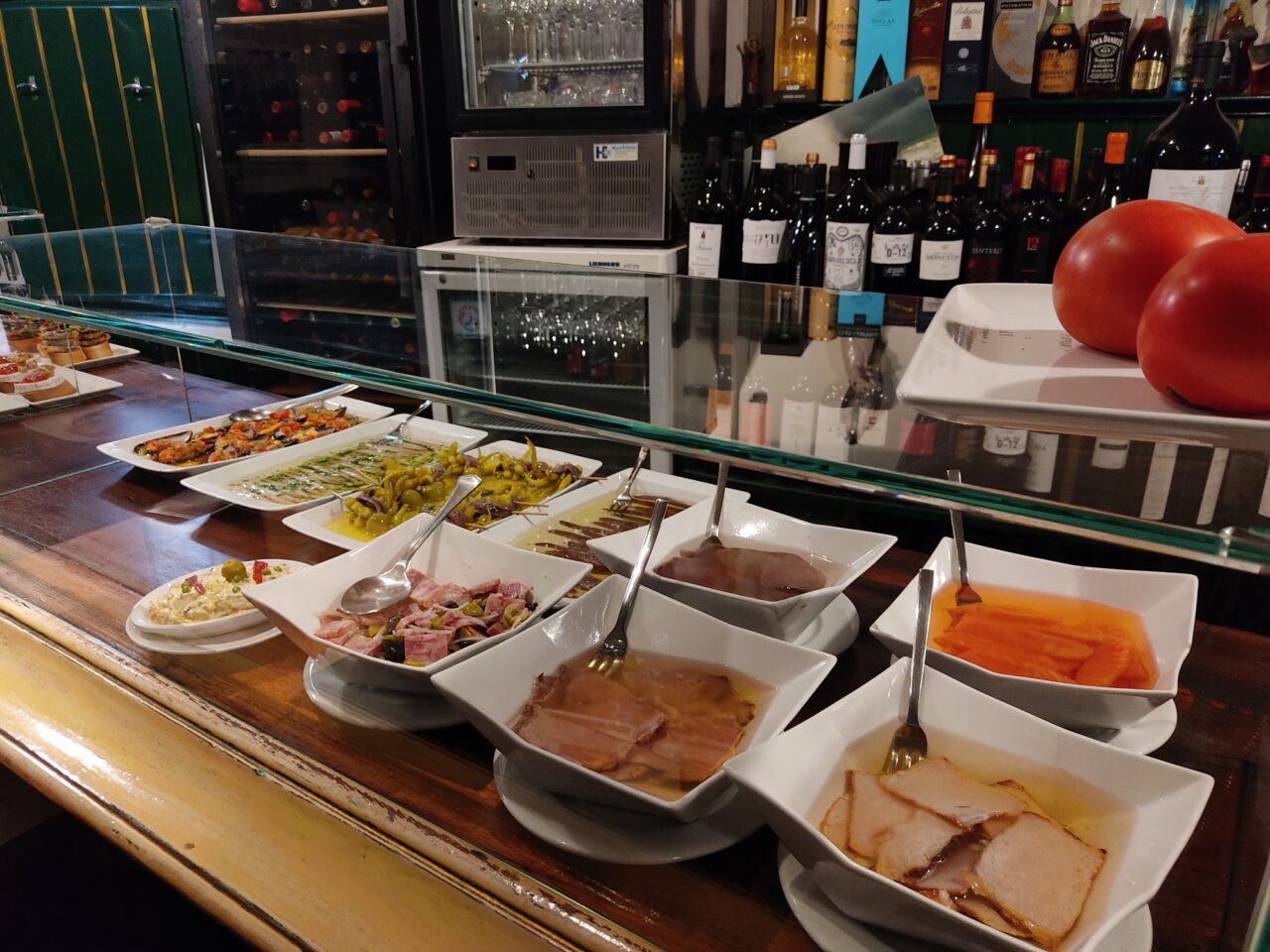
“Poteo” and pintxo tours in the Old Town
San Sebastián’s old town is the city’s quintessential pintxo district. You’ll find bars packed with pintxos on every street, but some are better than others. Here are our favourites.
- Paco Bueno, on Calle Mayor: this tavern is a city classic, and the ‘gamba gabardina’ is its star pintxo
- Goiz Argi, on Fermín Calbetón: the prawn skewer or the ‘Mari Juli’ (a pintxo of smoked salmon, green pepper and anchovy), dressed in the house’s secret sauce, are must-try delicacies.
- Bar Etxebe, on Calle Iñigo: in this family-run bar frequented exclusively by locals, we recommend the classic gilda, because you simply must try at least one gilda during your pintxo crawl.
- Bar Txepetxa, on Calle Pescadería: renowned for its mastery of anchovies, this establishment takes these fish to a whole new level, and it’s essential to try one of its pintxos during the tour.
- La Viña, on Calle 31 de Agosto: its cheesecake is renowned worldwide, so we suggest this final stop to round off the tour with a dessert.
“Poteo” and pintxo tours in Gros
This neighbourhood is becoming increasingly popular for a night out. With a youthful, surfer vibe thanks to its proximity to La Zurriola Beach, here are a few long-standing local spots we recommend.
- Txofre Taberna, Calle Gloria: this bar’s Russian salad – a dish from the former Ezkurra – is part of the city’s culinary heritage and one of the pintxos with the most loyal following.
- Bar Bergara, Calle General Artetxe: one of the first bars in Gros to revitalise the culture of miniature gastronomy, here we recommend the classic Txalupa (a mushroom pintxo with seafood cream and prawns) which has been making history for decades.
- Bar Rikardo, Calle General Artetxe: at this old-school bar, a tasty mussel croquette is a must.
- Bar Desy, Calle Ronda: here we recommend having a few beers and ordering a ‘zurito’, as they have six taps of craft beers – a distinctive feature not found in many other places. For a pintxo, try the marinated anchovies on toast with grated tomato and olive oil.
- La Bodega Donostiarra, on Calle Peña Y Goñi: the Indurain, which could be a Gilda dressed to the nines, is a must-try. It features marinated bonito, anchovies, chillies, spring onion and olives.
“Poteo” and pintxo tours in the City Centre or Romantic Area of the city
In the city centre, there are bars with a long-standing tradition, and some of their pintxos are city classics that you simply must try.
- Bar Antonio, Calle Vergara: although everything here is delicious, we recommend the potato omelette, as few places cook it as succulently as they do here.
- Bar Iturrioz, Calle San Martín: its hot pintxos are well known, and the grilled fresh foie gras is a must-try.
- Casa Vallés, Calle Reyes Católicos: a pintxo of the classic battered hake is a great choice here, where, it is said, the ‘gilda’ was invented decades ago.
- Bar Ciaboga, Calle Easo: the garlic potato dish is an absolute must-try. A pintxo created in the 1960s that has never gone out of fashion.
- La Espiga, Calle San Marcial: this street has become the hub of the bar-hopping scene in the city’s Romanesque quarter. The traditional txorreras are the house speciality.
“Poteo” and pintxo tours in Antiguo
El Peine del Viento, la Playa de Ondarreta, el funicular de Igeldo, pero también los pintxos. La calle Matía, la vía principal de este barrio, es todo un bullicio a la hora del poteo, y unos pintxos por esta calle al mediodía, y antes de cenar, son una experiencia local como ninguna otra.
- La cervecería, Plaza Gorgatxo: this square offers a moment of calm before the hustle and bustle of Calle Matía. The sautéed mushrooms with truffled egg yolk make for an exceptional starter.
- Antzara, Calle Matía: now that you’re in the mood, we suggest stopping off at Matía to sample the legendary stuffed fried mussels.
- Oliyos, Calle Escolta Real: this is one of the old-established bars in the Old Town. Located on a side street off Calle Matía, its speciality—a cold pintxo of anchovies in oil with egg and vinaigrette—lives up to its name.
- Triku Harri, Calle Matía: baby squid with onions or pork cheeks in red wine is a great way to round off your visit to Calle Matía.
- La Rebotika, Avenida Zarautz: a stop here allows you to explore the whole of Calle Matía and try this establishment’s original version of fried eggs with piquillo peppers, served with their Arzak pintxo.
How can you enjoy pintxos in San Sebastián like a local?
When it comes to going out for a drink or some pintxos, there’s an unspoken agreement that we locals always stick to. Here are the basics of that unspoken agreement, so you can enjoy your night out and pintxos tour just like a true local.
- The round is done in a specific area: it takes place in a particular neighbourhood and involves visiting several bars in that area. As you change bars with every round, choose bars that are close to one another so the ritual doesn’t drag on.
- The round is done standing up: no sitting down. Sample the drinks and pintxos whilst standing in a circle with your friends or, if there aren’t many of you and you’ve managed to find a spot, leaning against the bar.
- Order at the bar: don’t wait for someone to come and serve you – take the initiative. Head to the bar, make some space, and place the order for the group. In the process of getting to the bar and getting served, you’ll find other groups in the same situation, and if you show a bit of empathy, you’ll end up meeting people quite naturally. You might even end up sharing future stops, or even the whole route.
- Everyone chooses a bar: consensus is fine, but every time you change direction, someone has to take the lead. At the end of each round, someone will ask the classic ‘Where shall we go next?’, and it’s only fair that the choices take turns.
- Everyone pays for a round: don’t complicate things by splitting the bill because, as you’re going to several places, the simplest thing is for everyone to pay at one of the bars.
- The ‘espuela’: this is a ritual. The ‘espuela’ is the name given to the final round. As it’s hard to bring the night out to a close, when it seems it’s about time to finish, someone suggests the ‘espuela’, which is the stop where the night is rounded off.

A journalist with over 20 years of experience in the media, specializing in creative storytelling and informative content. Through Go Local, she connects with the people, places, and events that matter in San Sebastián, reporting with journalistic rigor on the milestones that shape the city’s identity.