The Txakoli Route: the ultimate immersive wine tourism experience
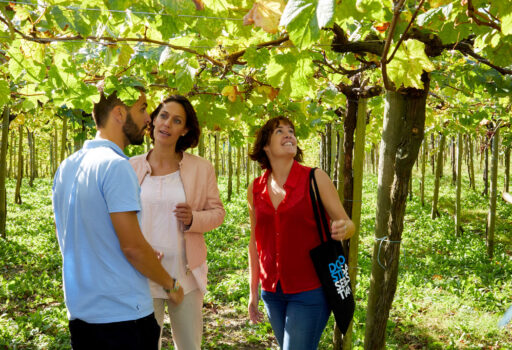
Txakoli is part of the Basque character: fresh, direct and linked to the land. Following its route means visiting small family wineries, many of them on hillsides, facing the sea or nestled in valleys, where they still work as they always have.
This experience combines wine, landscape and local culture in an intimate way, without rushing or large groups, ideal for those who prefer to discover things at their own pace.
At Go Local San Sebastián, we offer tours that connect with this essence, visiting lesser-known areas, talking to producers and enjoying the surroundings from a local and authentic perspective.
History of the Txakoli Route
Although today you can find it in any pintxo bar, txakoli has not always received the recognition it deserves. For centuries, it was a humble wine, produced for local consumption in farmhouses and small wineries, without great pretensions or fame outside the Basque Country.
Its cultivation dates back to the Middle Ages, with vines planted in coastal and inland areas, taking advantage of difficult but generous soils. Over time, wineries organised themselves, improved techniques and committed to protecting their origin, giving rise to three designations: Getariako Txakolina, Bizkaiko Txakolina and Arabako Txakolina.
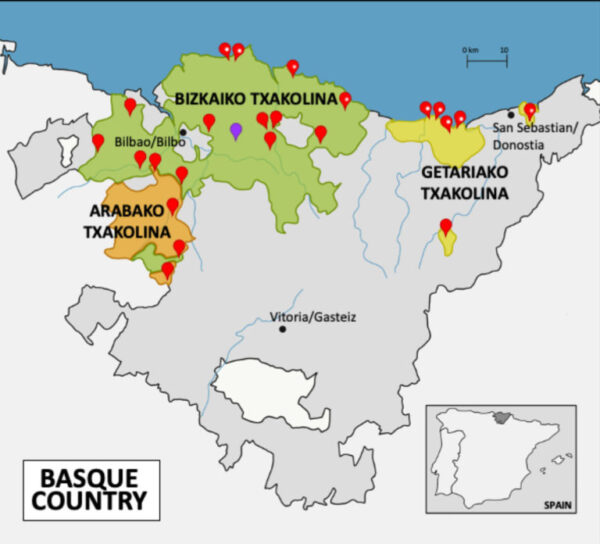
Source: Fuente: www.genomic-resources.eus/metagenomica-del-txakoli/
The txakoli route arose from this desire to revive tradition, raise awareness of it and open the doors to a world that was previously only shared among neighbours. Today, travelling this route is a way of getting closer to that history, in which wine and landscape have always gone hand in hand.
Main points along the route
The Txakoli Route is not a single path, but rather a collection of areas that share a wine-making tradition but, at the same time, have their own way of making and understanding this wine. Each territory contributes different nuances, both in terms of climate and grape variety, soil type and production methods.
That’s why following this route is also a way to discover different landscapes, customs and flavours at each stop. And if you really want to know how txakoli is made, visiting just one winery is not enough: you have to visit more than one area to understand its diversity.
The three main points that make up the route are:
- The Getaria Txakoli Route (Gipuzkoa), next to the sea and with views that speak for themselves.
- The Aiaraldea Txakoli Route (Álava / Bizkaia), further inland, with terraced vineyards and a very different setting.
Below, we explain what makes each one special.
The Getaria Txakoli Route (Gipuzkoa)
This is perhaps the best-known txakoli route, not only for the quality of the wine but also for its location: sloping vineyards overlooking the Cantabrian Sea, nestled between fishing villages and green hills. Here, the wine has a marked acidity, a hint of saltiness and a freshness that matches the landscape.
The route usually passes through Zarautz, Getaria and Zumaia, although it also takes in rural neighbourhoods such as Elkano and Aizarnazabal. It is a perfect plan for combining nature, gastronomy and Basque culture.
Among the wineries that can be visited are Txakoli Ameztoi, Txomin Etxaniz, Rezabal and Talai Berri, all of which offer guided tours, tastings and detailed explanations of the winemaking process. Many of them have outdoor terraces and offer the possibility of purchasing wine directly on site.
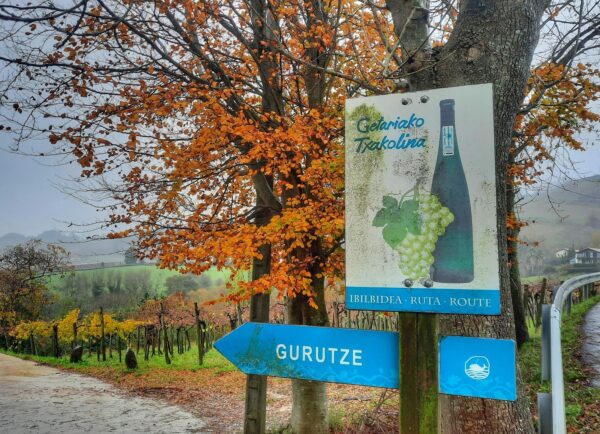
Source: es.wikiloc.com/rutas-senderismo/getaria-txakoli-askizu-90032901
In addition to the wineries, the route can include hiking among vineyards, visits to the port of Getaria, or even be combined with gastronomic experiences such as traditional grills, cider houses, or local museums such as the Balenciaga Museum.
The Aiaraldea Txakoli Route (Álava / Bizkaia)
Less well known but equally interesting, the Aiaraldea route runs through the interior of Álava and Bizkaia, with a more mountainous landscape and wineries integrated into farmhouses and small family farms. Here, txakoli has a different profile: rounder, less salty, and with a more aromatic character.
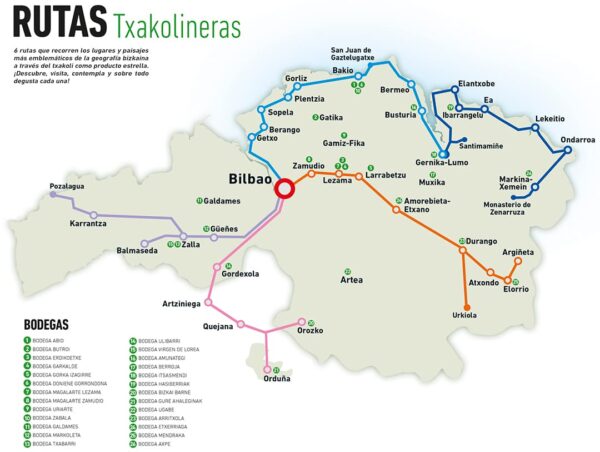
Source: bilbon.biz/rutas-del-txakoli-de-bizkaia/
The route usually passes through Laudio, Amurrio, Artziniega and Okondo, small towns surrounded by nature and with a cultural heritage that is well worth discovering. The setting is quieter and more rural, ideal for those seeking a leisurely and authentic experience.
Recommended wineries include Beldui, Señorío de Astobiza, Arabako Txakolina, Gure Ahaleginak and Baserria, all of which offer tastings, direct sales and, in many cases, complementary activities such as walks through the vineyards or tastings paired with local products.
Here, in addition to wine, you can visit ethnographic museums, nearby natural parks and traditional fairs, making this part of the route a complete getaway, especially interesting for those who want to get off the beaten track.
Experience the full Txakoli route with Go local
Each area of txakoli has its own character, and getting to know them all gives you a more complete picture of this wine and the culture surrounding it. At Go Local San Sebastián, we take you on this route with a guided tour that combines wine, landscape and tradition in an intimate and well-told experience. You can see all the details here.

Hegoi has been a local guide in Go Local San Sebastian for almost 10 years. A local among tourists, who loves his profession and enjoys showing his hometown. He also plays a key role in the teams of Free Walking Tour and Bike Rental.