Route through Guipúzcoa
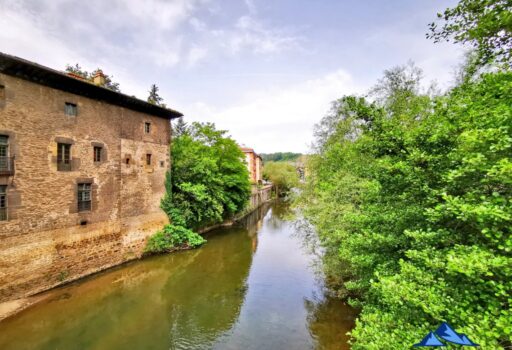
As residents of San Sebastián, we sometimes tend to focus too much on our city and forget about the other towns in our province, Guipúzcoa. But precisely because we are aware of the richness of our territory, we would like to present a route through Guipúzcoa so that you can discover the province of which we are the capital. We hope you like it!
First stop: Hondarribia
We begin this route in the coastal town of Hondarribia. A fishing village that still has walls surrounding its old town. Hondarribia is considered one of the most beautiful towns in Guipúzcoa, so it’s not to be missed. It is located right on the border with France, across the Bidasoa River. Here you will find beaches, mountains, excellent cuisine and a small town where you can stroll around and enjoy its traditional architecture. For us, it’s a must-see.
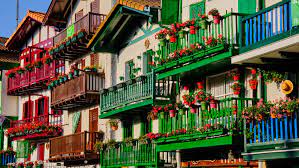
The painted houses of Hondarribia. Photo by Condé Nast Traveler.
Second stop: Pasajes
We continue along the coast, in Pasajes Bay, where its two most picturesque neighbourhoods, San Pedro and San Juan, are fine examples of fishing villages. You can cross from one to the other by motorboat, which crosses the mouth of the enormous bay that is home to the port of Pasajes. Here you won’t find a beach, but you will find mountains, good restaurants and, especially in San Juan, a village that has hardly changed since the 16th century. Another must-see on the Gipuzkoa coast, San Juan is known because the writer Victor Hugo spent some time here and loved it. And who are we to contradict Victor Hugo?
Third stop: Tolosa
We head inland to Guipúzcoa to visit Tolosa, which was the provincial capital for a few years in the 19th century. Surrounded by mountains, Tolosa has preserved its stately buildings, but it is best known for its market, which has been held every Saturday for centuries. Its cuisine is therefore famous, and some of its restaurants welcome visitors from all over the world. If you want something different from the coast and wish to discover the interior of Guipúzcoa, Tolosa is undoubtedly a good place to start.
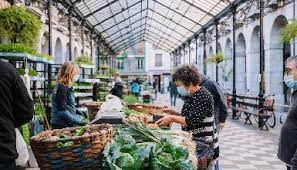
The market in Tolosa. Photo by Euskadi Tourism.
Fourth stop: Ordizia
Another town with a famous market is Ordizia. Its market is held on Wednesdays and is a great excuse to discover seasonal products that you can then enjoy in typical dishes at local restaurants. One of these products is Idiazabal cheese, which originates from the village of the same name, located just a few kilometres from Ordizia. For us, cheese is a religion, so you can’t miss a visit to the area.
Fifth stop: Zumárraga
Zumárraga is not a town that is visited as much as the previous ones, but one of its monuments is well worth a visit to this town in the middle of the mountains of Gipuzkoa. This is the chapel of Santa María de la Antigua, a temple halfway between Romanesque and Gothic, whose wooden roof is assembled without using screws or nails of any kind. A masterpiece of medieval construction, it is not for nothing that it is called the cathedral of Basque chapels.
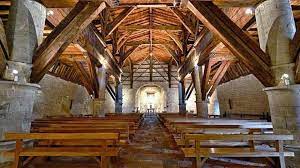
Interior of Santa María de la Antigua. Photo by Deia.
Sixth stop: Bergara
Bergara is on the border with Bizkaia and is another one of those inland villages with an old medieval quarter, stately homes and Baroque churches so typical of Guipúzcoa. Also surrounded by mountains, Bergara is known for its pastries called ‘rellenos de Bergara’ (Bergara fillings), which will delight those with a sweet tooth. Because we always talk about the main dishes of our cuisine, but the desserts are also worthy of attention.
Last stop: Mutriku
We return to the coast, this time to the opposite end of the province. Mutriku is a traditional fishing village, similar to Hondarribia, but nestled in the mountains, descending to the sea through narrow streets. Here there is a beach, a port and, of course, excellent fish. But there are also mountains, because if there is one thing that unites all of us in Gipuzkoa, it is that we are surrounded by mountains.
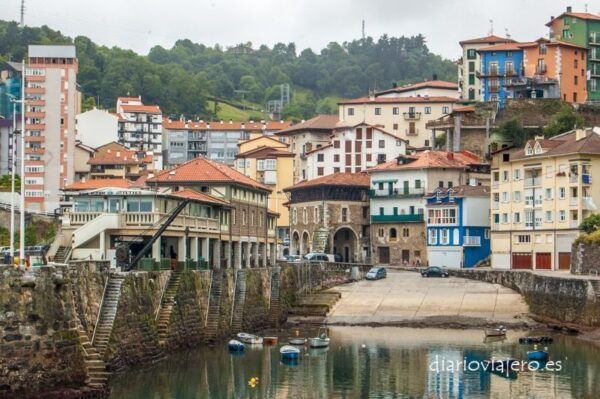
Mutriku from the sea. Photo by diarioviajero.es

Hegoi has been a local guide in Go Local San Sebastian for almost 10 years. A local among tourists, who loves his profession and enjoys showing his hometown. He also plays a key role in the teams of Free Walking Tour and Bike Rental.