The Coat of Arms and Name of San Sebastián: History, Meaning, and Interesting Facts
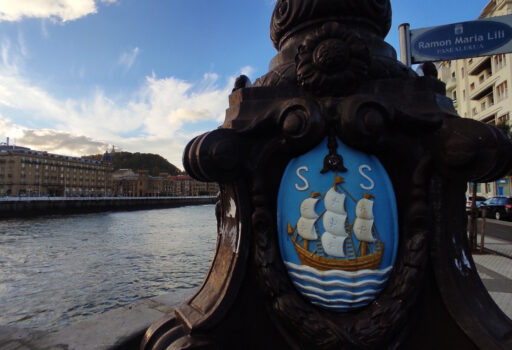
The coat of arms and the name of San Sebastián are, along with the city’s flag, the elements that best define Donostia. The coat of arms features a sailboat and the sea. The name comes from a French saint who died in Rome. What is the significance of these two emblems of San Sebastián? What is the story behind the city’s most iconic symbols?
Title: Why Is San Sebastián Called San Sebastián?
The city of San Sebastián owes its name to Saint Sebastian the Martyr. But not because this saint was a native of the area or had any significant connection to the region; no. The name comes from the Monastery of San Sebastián el Antiguo, which was the nerve center of the area back in the 11th century.
To understand the name “San Sebastián,” we have to go back to the city’s origins—to its very founding. Its name has nothing to do with the people of Donostia, nor is it related to any saint from the city itself; rather, it stems from an ecclesiastical connection that dates back to when Donostia was a town in the Kingdom of Navarre.
Origin of the Name “San Sebastián”
It was the11th century, and the main settlement of San Sebastián—as was to be expected in the Middle Ages—was a religious center: the Monastery of San Sebastián el Antiguo. It was located where the Miramar Palace stands today, and it was under the jurisdiction of the Monastery of Leyre because, at that time, the territory of San Sebastián was part of the Kingdom of Navarre.
Needless to say, there are no documented references to the city until the 12th century. However, the name San Sebastián already appears in the earliest written records about the place: when the city was founded. This occurred in 1180, when Sancho VI the Wise, King of Navarre, named it Villa de San Sebastián.
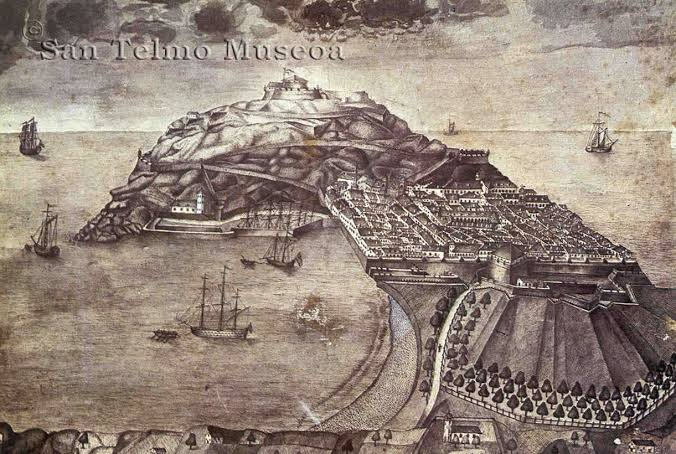
Because San Sebastián was originally a town in Navarre, and the name given to it referred to the main center of social and administrative life in the area at that time: the Monastery of San Sebastián el Antiguo.
Who was Saint Sebastian, and what is his connection to the city?
Saint Sebastian was a Frenchman born in Narbonne in the year 256, although he lived his entire life in Italy (the former Roman Empire) because his mother was from Milan. It was there, in what is now Italy, that he embraced Catholicism, a religion that was banned in the Roman Empire at that time.
Because the Roman Empire did not officially adopt the Catholic religion until the year 380. And until then, the practice of Christianity was punished throughout the empire. Even so, Saint Sebastian, who was a member of the Roman army, never professed the emperor’s polytheistic religion; on the contrary, he would gather with Christian prisoners to practice his faith. For this reason, he was sentenced to death by arrows on the emperor’s orders.
He died in the year 288, and has been venerated as a saint since approximately the 4th century A.D.
A monastery dedicated to the saint who protected people from the plague
Religious depictions of Saint Sebastian always feature arrows. This can be seen in the city of San Sebastián itself, on the portico of the Basilica of Santa María, where a figure of Saint Sebastian pierced by arrows presides over the church’s pediment.
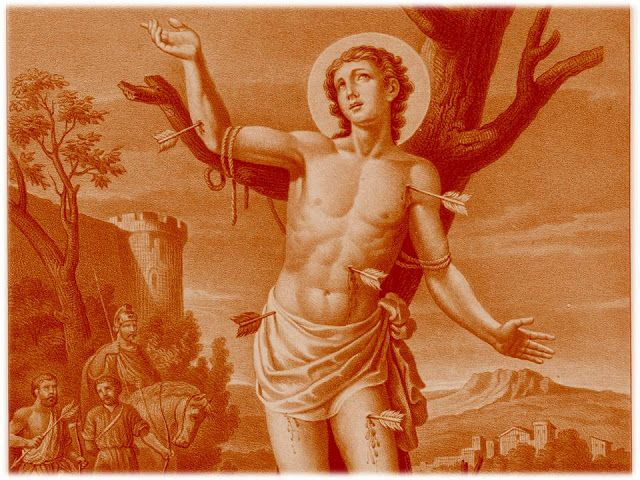
It is believed that the arrows may refer to the plague, because at that time this epidemic was depicted as deadly arrows shot by an angry god. It is worth remembering that during the Middle Ages, the plague infected entire populations and was one of the most feared causes of death.
That is why it is so important to venerate patron saints capable of protecting the faithful from such epidemic evils. Saint Sebastian would thus have been a protector against the plague. And that is why the Monastery of Leyre dedicated the Monastery of Saint Sebastian the Elder to this saint.
Coat of Arms: What does the coat of arms of San Sebastián look like?
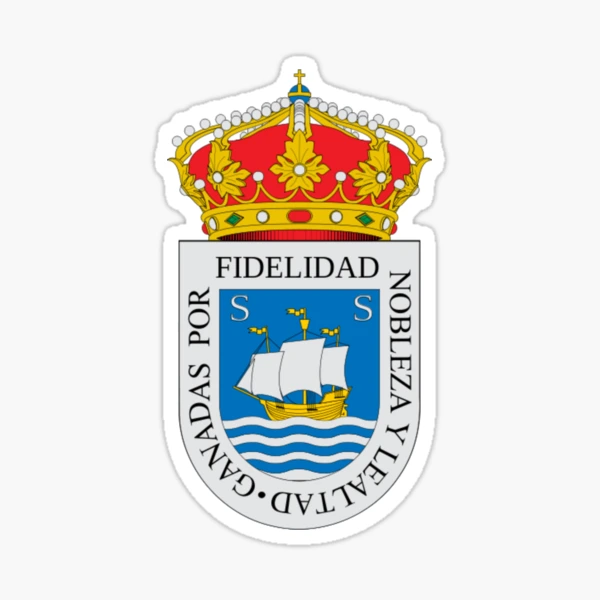
A three-masted ship sailing on a blue sea, with the city’s initials (SS) visible at the top, flanked by the words Nobility and Loyalty Earned Through Faithfulness, and surmounted by a crown. The coat of arms of San Sebastián represents the city’s maritime identity.
This city emblem has undergone changes over the centuries, some of which were made in recent times to adapt the design to the modern era, but the maritime spirit of the coat of arms has remained intact since the 13th century. Even then, a schooner steered by two sailors symbolized the city.
History and Meaning of the Coat of Arms of San Sebastián
The coat of arms of San Sebastián has evolved over the centuries. It began as a two-sided coin in the Middle Ages and is now a full-color logo. The craftsmanship of each historical period has shaped the coat of arms of San Sebastián throughout time: metal coins, stone shields, wax seals on written documents, and digital logos on color prints.
But one thing has remained unchanged over time: its meaning. The maritime spirit of the seal—and the depiction of a ship at sea—has always been part of the city’s image. This is due to the city’s origins as a center of maritime trade and fishing.
First coat of arms of San Sebastián: 13th century
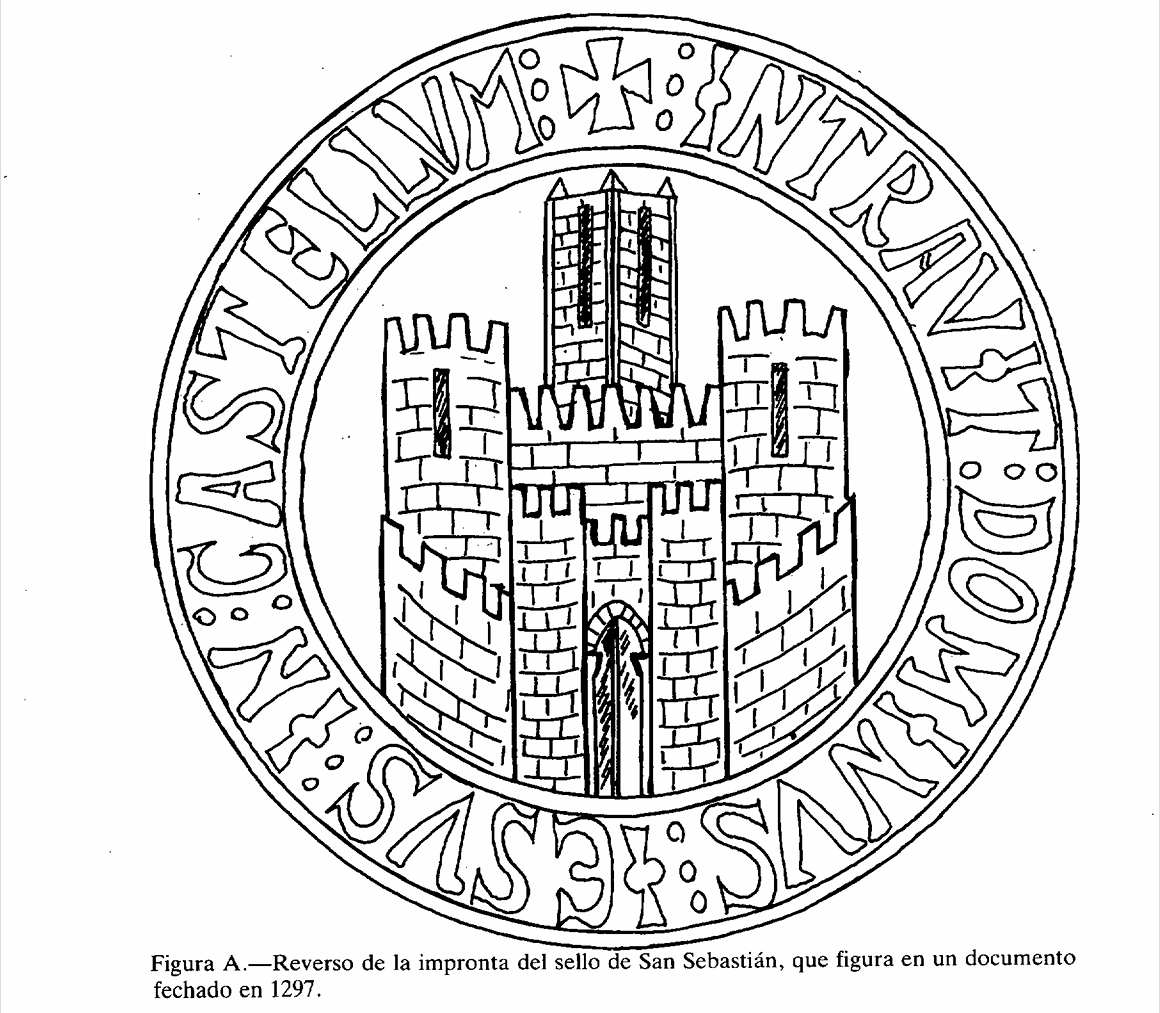
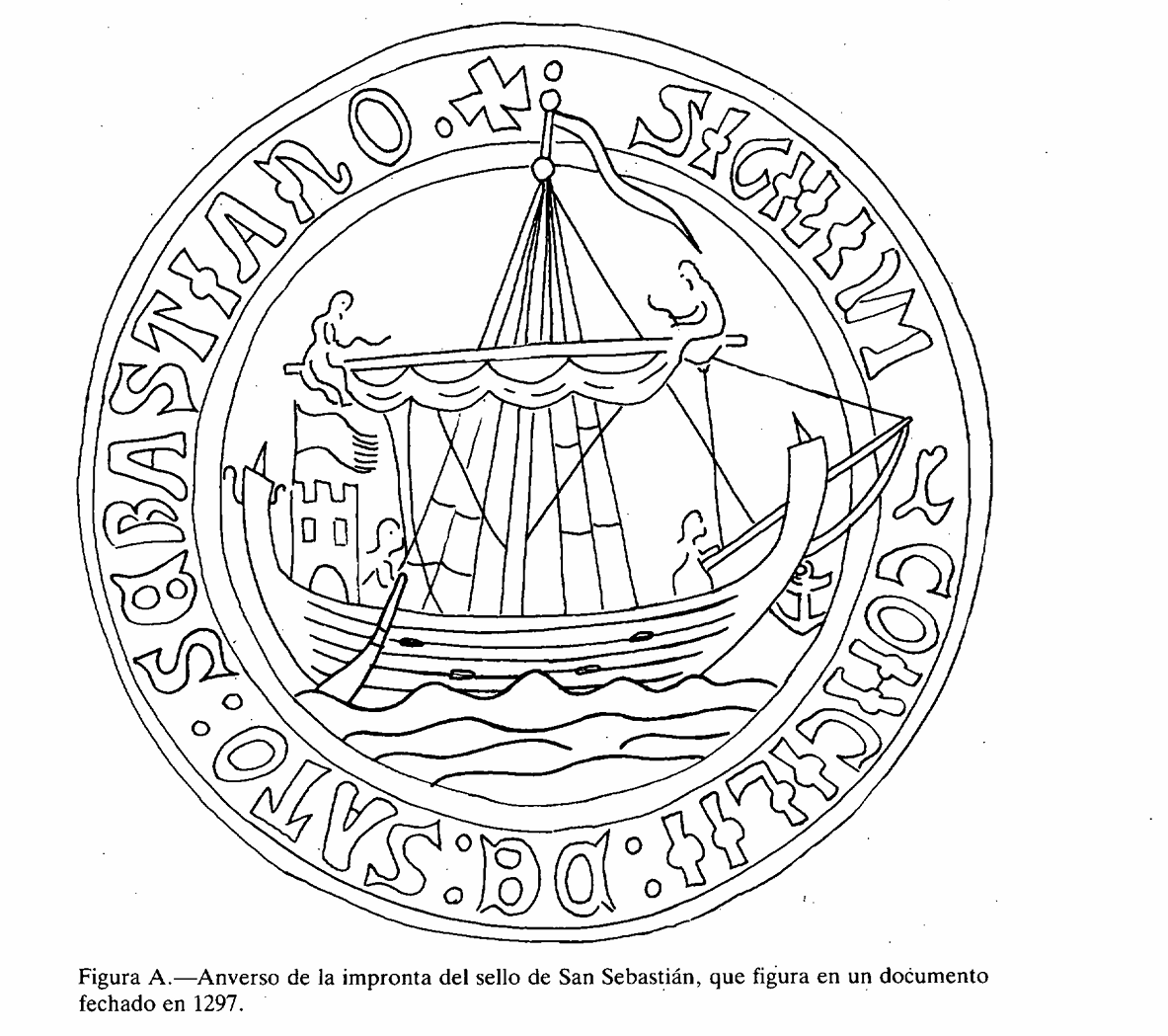
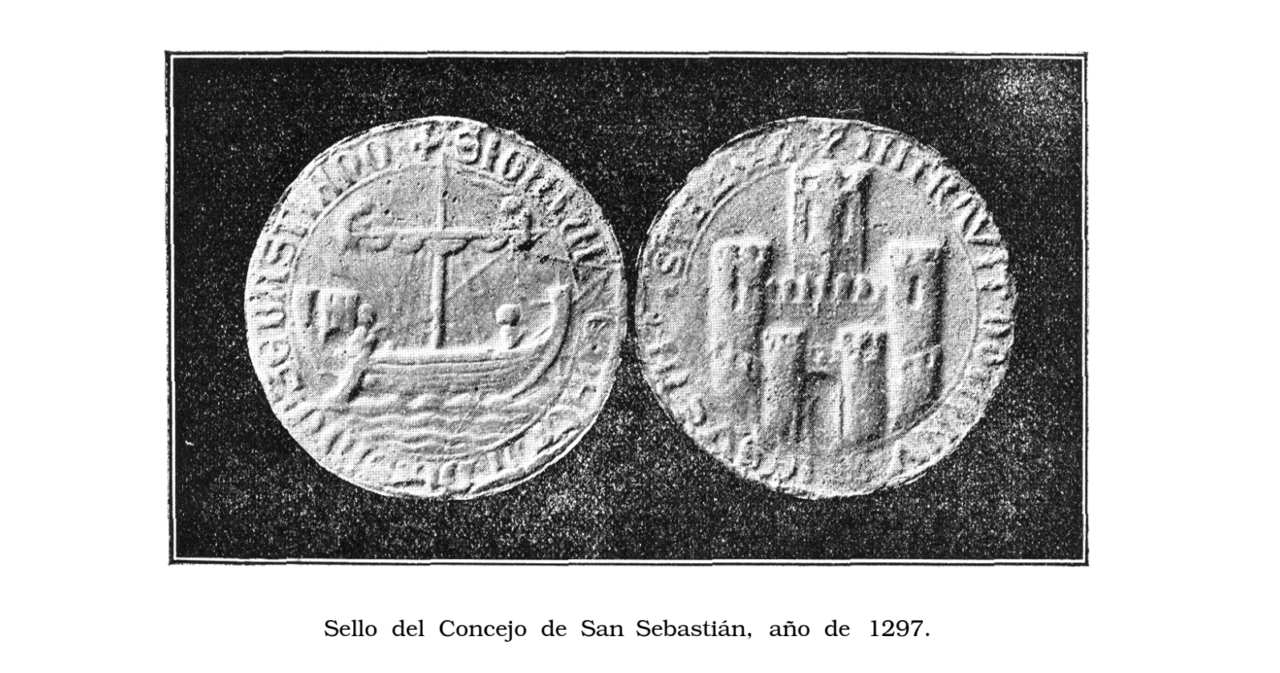
The first reference to a coat of arms for San Sebastián dates back to 1297. The coat of arms appears in a document from that year, preserved in the National Archives of France, and consists of a wax emblem formed by two spheres. The left sphere features a walled fortification in relief, while the right sphere depicts a boat with two sailors.
On the obverse of this circular seal, the ship’s stern faces to the left of the viewer, and the Latin inscription Sigillum conciliu de Santo Sebastiano is visible. On the reverse side, which depicts the fortress, the inscription reads Intravit Dorninus Ihesus in Castelum. This first coat of arms faithfully captures the character of the city at that time: a defensive fortress embroiled in constant battles due to its strategic location, and a population devoted to maritime trade and fishing.
Second coat of arms of San Sebastián: 17th century
The next reference dates from the 17th century. It is a stone coat of arms, part of a private collection, which also depicts a ship. The portion depicting the walled fortress has disappeared, and the maritime depiction has also undergone changes. It no longer depicts that first single-masted vessel from the 13th century, but rather a larger four-masted schooner—a ship designed for ocean voyages.
There are documentary references to what this coat of arms looked like, as Don Juan de Mendoza, Chronicler and King of Arms to Charles II, signed a certification regarding the city’s coat of arms on May 24, 1682, which was preserved in the Municipal Archives. Even though it was destroyed in the 1813 fire in San Sebastián, in 1895 the City Council requested a copy of the aforementioned certification from the Royal Archives.
It states: “The coat of arms of the City of San Sebastián, in the Province of Guipúzcoa, consists of a blue field bearing a ship with silver sails, set upon blue and silver waves, and at the very top of this coat of arms, two ‘SS’ and silver letters. All surrounded by the motto ‘Nobility and Loyalty Earned Through Fidelity’” (*1).
The words Nobility and Loyalty Earned Through Fidelity were the heraldic titles granted by Carlos V in 1522, in recognition of San Sebastián’s fidelity to the Crown of Castile.
Third Coat of Arms of San Sebastián: 20th Century
In 1908, a final change was made to the coat of arms, bringing it to the form we know today. It was a minor modification regarding the orientation of the ship, based on the 1682 certification. The aim was to depict the ship facing west (heraldic right), as in the ancient coats of arms, rather than east (heraldic left).
This change was approved by the San Sebastián City Council on May 6, 1908, and was ratified in 1949 during the Purchasing Committee meeting on November 16.
Current coat of arms of San Sebastián: 21st century
Although the coat of arms of San Sebastián can be seen as it was designed at the beginning of the last century when we look at it on buildings (see the coat of arms in the Plaza de la Constitución or on the City Hall towers), the image has been adapted to modern times. This is because coats of arms no longer adorn the facades of houses, nor are they used to seal official documents with wax.
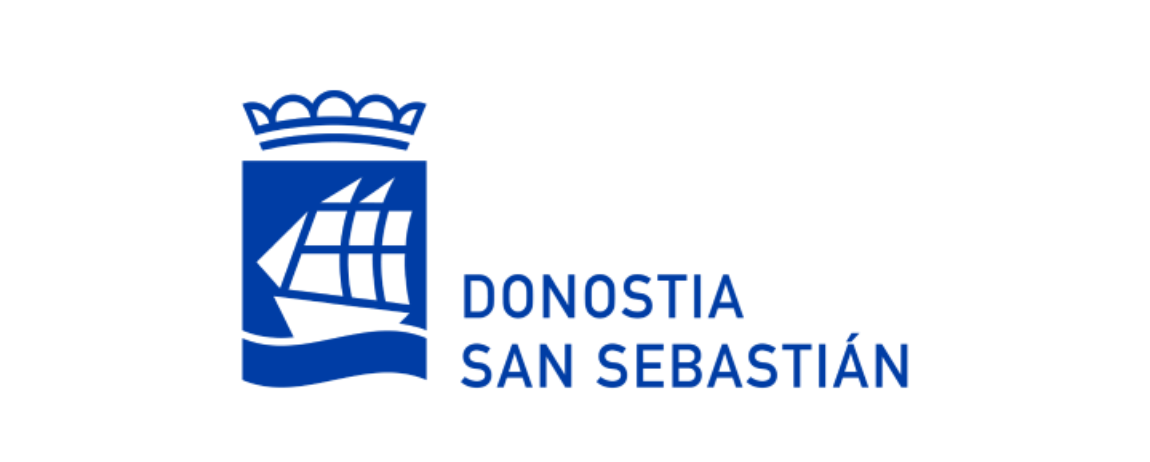
For decades now, the coat of arms has been disseminated through new forms of branding—that is, via a logo. On websites, posters, and official documents, we can easily spot the city’s old coat of arms: that ship sailing westward with its white sails unfurled on a blue sea.
The current logo dates from 2017, when the City Council’s corporate identity was modernized.
Interesting Facts About the Name and Coat of Arms of San Sebastián
- Did you know that San Sebastián owes its name to the 11th-century sanctuary dedicated to Saint Sebastian the Martyr, from the time when the city was part of Navarre? In the 11th century, the main settlement in San Sebastián was the Monastery of San Sebastián el Antiguo, located where the Miramar Palace stands today and under the jurisdiction of the Monastery of Leyre, at a time when the territory of San Sebastián was part of the Kingdom of Navarre. When the King of Navarre granted the town the title of “Villa” in 1180, he named it after the saint to whom the monastery was dedicated.
- Did you know that you can see the coat of arms of San Sebastián on several buildings in the city? You can see it on San Sebastián City Hall (facade and towers), the Post Office building (facade), in the Plaza de la Constitución (on the building that housed the old city hall in the Old Town, above the clock), on the facade of the Teatro Principal, on the Basilica of Santa María (at the top of the portico), the Bretxa Market (on the two side gables flanking the main entrance), the Fish Market building (at the top of the facade), and on the streetlights of the Santa Catalina Bridge and the María Cristina Bridge.
- Did you know that San Sebastián’s coat of arms is on the lids of every manhole cover in the city and on the trash cans? You don’t even need to visit the city’s most iconic buildings—if you walk through the streets of San Sebastián, you’ll come across its coat of arms time and time again, on the ground and on trash cans. That’s because the city’s manhole covers are engraved with this emblem—the older version of it—and the fronts of the trash cans feature metal plaques bearing the more modern version of the coat of arms.
References
- 1. Gómez Piñeiro, Javier; Sáez García, Juan Antonio. San Sebastián. Donostia. Geografía e Historia Un viaje a través de su historia: INGEBA

A journalist with over 20 years of experience in the media, specializing in creative storytelling and informative content. Through Go Local, she connects with the people, places, and events that matter in San Sebastián, reporting with journalistic rigor on the milestones that shape the city’s identity.