Basic Euskera: Words, Phrases, and Sayings for Traveling in the Basque Country
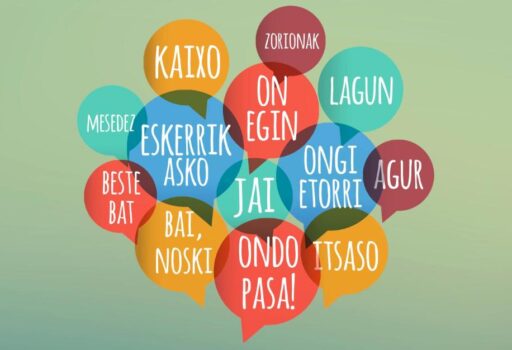
Euskera (basque) is the language spoken in Euskal Herria (which includes the Basque Country, Navarre, and the French Basque Country). In this post, we’ll teach you some basic euskera with words, phrases, and sayings for traveling through the Basque Country. Although there are fewer than a million speakers, it is the main symbol of our culture. If this is your first time here, we’ll appreciate not just a little, but a whole lot, if you address us using a few words in our language.
Introduction to the Basque Language and Its Importance
Euskera is a language unlike any other in the world, as its origin remains unknown. The only thing known for certain is that it is a pre-Indo-European language, but experts continue to research its origins and evolution. Currently, the oldest document we have in euskera is the Hand of Irulegi, which was discovered in northern Navarre just five years ago, in 2021. This demonstrates the ongoing nature of this research.
Language is a key element of any culture, and euskera is no exception in Basque culture. The connection between the people of the Basque Country and their region is undeniable, and this is evident in our traditions, symbols, music, art, mythology, cuisine, and other aspects of our intangible cultural heritage. For this reason, we have chosen to present this exhibition in euskera, as it is what truly reflects our identity.
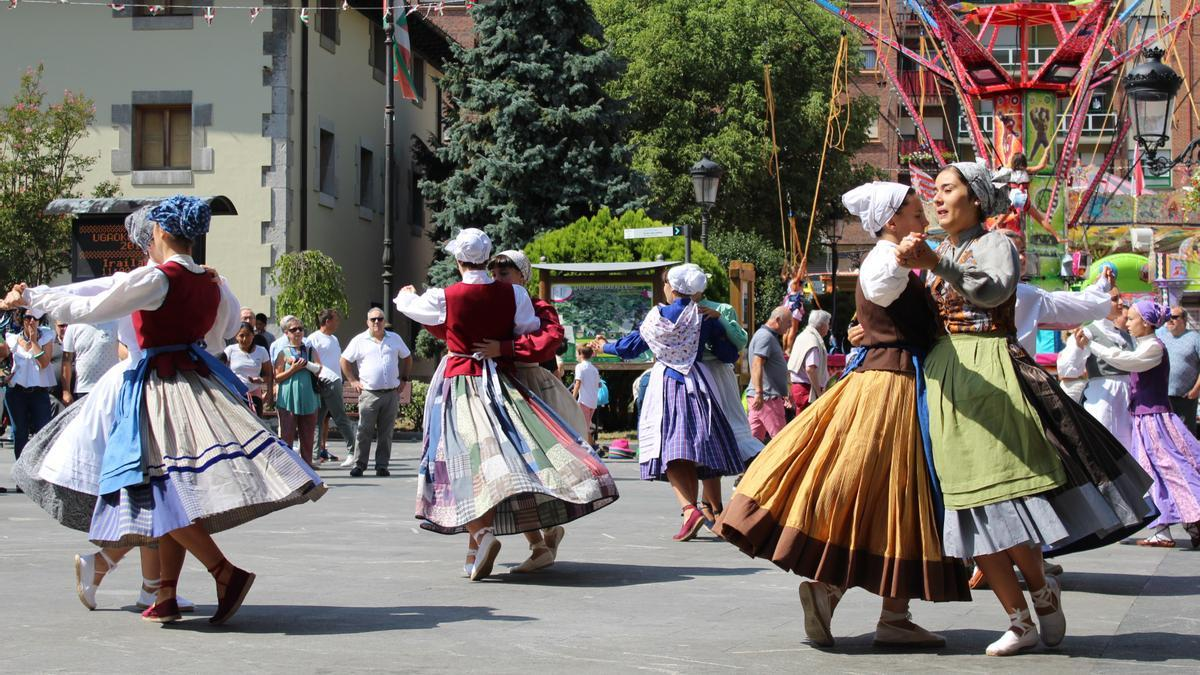
Furthermore, the euskera language has been banned and/or suppressed on numerous occasions. The most recent instance was during the 20th century, under Franco’s Spanish dictatorship, when it was forbidden to use it, and anyone who did so was punished. As a result, rather than causing the language to disappear, its use was encouraged in small, localized settings, and it gained strength after the end of the dictatorship. That is one of the most important reasons we have for preserving it, since if it has survived to this day after so many centuries, it is important to continue doing so.
Basic words for everyday life
Kaixo — Hello
Agur — Goodbye
Eskerrik asko — Thank you (very much)
Ez horregatik — You are welcome
Kontuz — Be careful
Egun on — Good morning
Arratsalde on — Good afternoon
Gabon — Good evening
Bai — Yes
Ez — No
Barkatu — Sorry
Mesedez — Please
Useful phrases for tourists
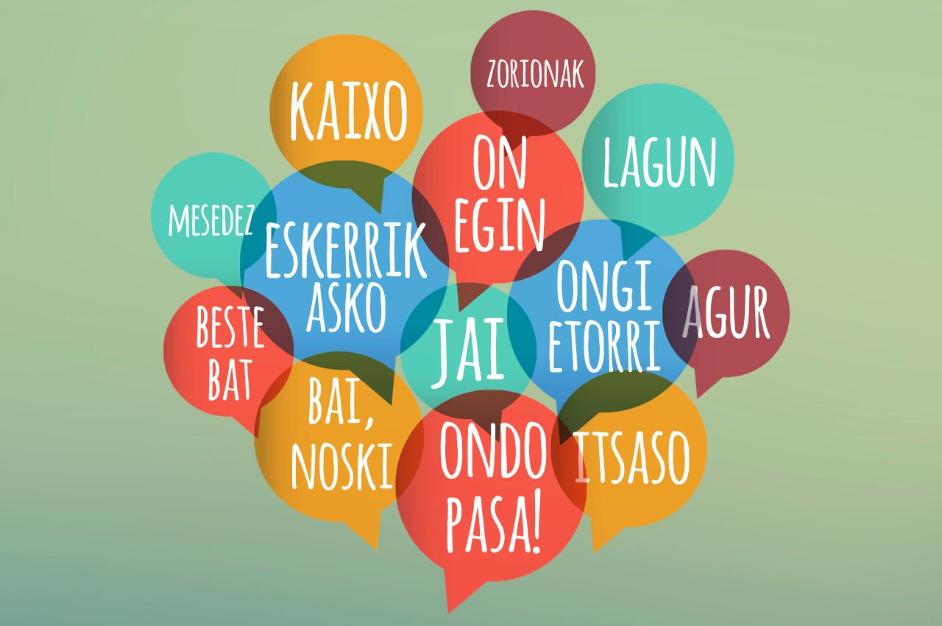
Ongi etorri — Welcome
On egin — Enjoy your meal
Topa! — Cheers!
Kontua, mesedez — The bill, please
Ez dut euskera ulertzen — I don’t understand euskera
Zer moduz zaude? — How are you?
Zer ordu da? — What time it is?
Laguntza, mesedez! — Help, please!
Local sayings and expressions with explanations
In euskera, there are many local words related to our way of life and the weather that often have no translation into other languages or aren’t used as much as they are here. Here are a few of them:
- Xirimiri: Light rain, drizzle.
- Gaupasa: To stay up all night; to spend the night partying without sleeping.
- Hamaiketako: The 11 a.m. snack.
- Ateri: The weather condition when it stops raining and the sky clears up.
- Aterpe: A place where you can take shelter from the rain.
- Txamarra: A thick jacket.
- Txirristra: A slide.
- Potear: To go out for beers, wine, etc., hopping from bar to bar or just grabbing a drink.
- Aspaldiko: An expression of surprise upon running into someone you haven’t seen in a long time.
- Akelarre: Literally, “goat’s meadow.” It refers to a nighttime gathering of witches and warlocks to perform rituals, dances, and spells.
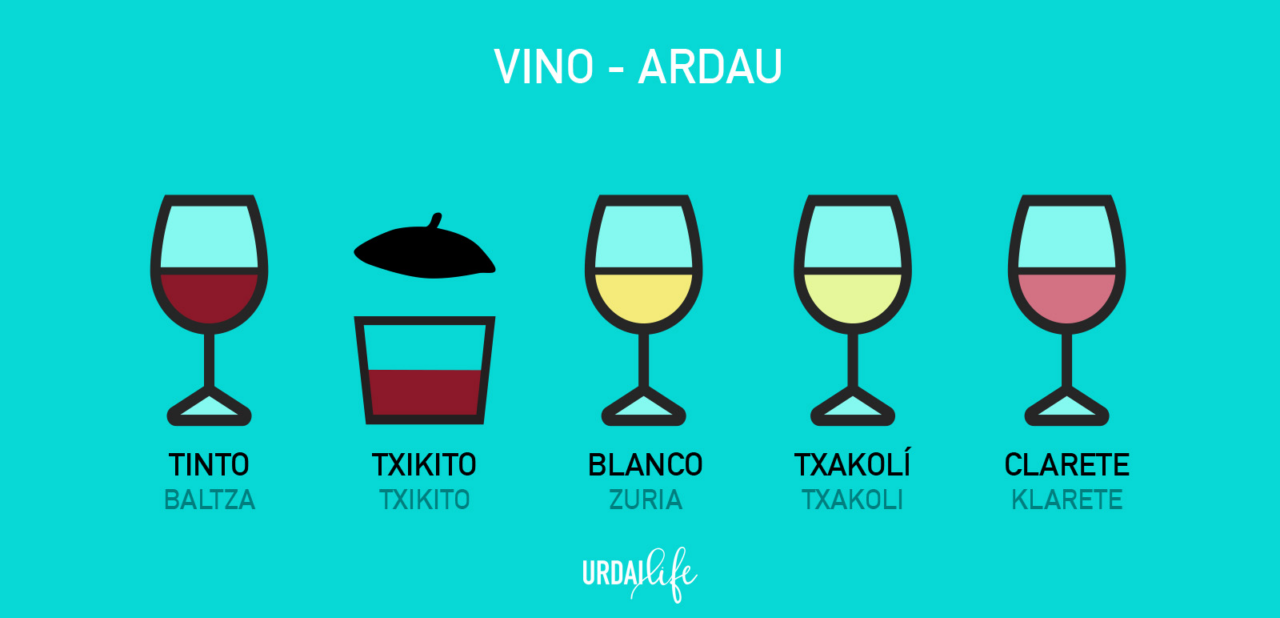
- Txikito: A glass of wine served in a small glass.
- Zurito: A beer smaller than a “caña.”
There are also certain words formed from other words that have a poetic meaning:
- Amona / Aitona (ama – ona / aita – ona): Grandmother / Grandfather (good mother / good father).
- Ilargi (hil – argi): Moon (dead light).
- Sorgina (sortzen duena): Witch (the one who creates).
- Herrimina (herria – mina): Nostalgia (the pain of the village).
- Suhiltzaile (su – hiltzaile): Firefighter (killer of fire).
- Muxutruk (muxua – truke): Free (in exchange for a kiss).
- Ortzimuga (ortzi – muga): Horizon (the edge of the sky).
- Hilerria (hil – herria): Cemetery (the village of the dead).
- Bihotza (bi – hots): Heart (two sounds).
- Basamortua (basoa – mortu): Desert (dead forest).
- Jatetxe (jan – etxea): Restaurant (the house where one eats).
- Logela (lo – gela): Bedroom (the room where one sleeps).
- Otsaila (otso – hila): February (the month of the wolves).
Finally, here are a few proverbs and idioms in case you’d like to try using them during your stay in the Basque Country:
- Joan pikutara!: A way to tell someone to get lost or leave you alone.
- Argi ibili: Be careful.
- Kale egin: To fail at something or stand someone up.
- Osasuna, munduko ondasuna: Health is the world’s greatest wealth.
- Zozoak beleari ipurbeltz: Look who’s talking!
- Esanak esan, eginak egin: Words are words; deeds are deeds.
- Utzi bakean, bakean dagoenari: Leave in peace those who are at peace.
- Eroriz ikasten da oinez: You learn to walk by falling.
- Non gogoa, han zangoa: Where the heart goes, the foot follows.
- Kalean uso, etxean otso: Said of someone who acts differently in public (kalean) than at home (etxean).
- Esne mamitan bizi: Refers to someone who lives in abundance and comfort. It translates as: “He lives in curd.”
- Usteak erdi ustel: This means that if you’re not certain about something, it’s better not to believe it. It translates to: “What you believe is half-rotten.”
Tips for learning euskera quickly
In the Basque Country, we distinguish between two types of people who speak the language. On the one hand, there are the euskaldun zaharrak (native Basque speakers), that is, people who have spoken euskera since birth. On the other hand, there are the euskaldun berriak (new Basque speakers), that is, people who have learned or are learning euskera later in life. And, although many people think otherwise, it is possible to learn this language even as an adult.
To learn Basque, we recommend that you start by learning euskera batua. Like almost any language, it isn’t spoken the same way everywhere—there are dialects—and, to keep things simple, euskera batua is the one you should focus on first. This is the standardized form of the language that all speakers understand and the one used in education, government, and other official contexts…
Immerse yourself in our audiovisual culture. Whether it’s film or music, we’re right up there in the Basque Country. If you’re more into movies or TV shows, check out the free subscription platform Primeran. You’ll find mostly Basque productions there, and you’ll have the chance to watch them in euskera to help you practice the language. If you’d rather listen to music, go to your favorite streaming service and search for any of the following bands or singers based on your musical tastes:
- Classical singers: Mikel Laboa, Benito Lertxundi, Xabier Lete, Lurdes Iriondo.
- Rock: Kortatu, La Polla Records, Eskorbuto, RIP, Roten XIII.
- Contemporary (pop and fusion): Izaro, Idoia, Olatz Salvador, En tol sarmiento, Zetak, Gorka Urbizu, Merina Gris, Bulego, Bengo.
- Folk: Oskorri, Gozategi, Alaitz eta Maider, Maixa eta Ixiar.
Finally, take part in an activity that promotes the use of euskera. You can sign up for an Euskaltegi—that is, the language schools created so that adults can learn the language—and also participate in the many activities they organize. They usually offer plenty of opportunities to practice outside of class so that you have a space where you can use the language. In the summer, for example, they hold barnetegiak, which are like camps where you spend the whole day speaking Basque. They’re also in charge of organizing events like the Korrika every two years to bring all Basque speakers together.

A Tourism graduate and member of the Go Local San Sebastián team since 2023. She combines her academic background with a deep knowledge of Basque culture, sharing it in an approachable way through her articles. Her goal: to help every visitor discover San Sebastián through the same recommendations she’d give a friend.