Modern architecture San Sebastian
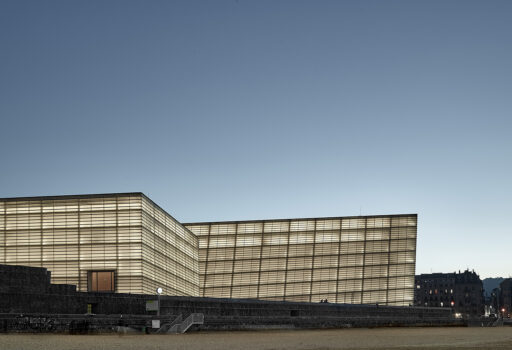
San Sebastian is well known for its architecture. The stately buildings in the city centre attract thousands of people every year, along with La Concha beach and pintxos. But San Sebastian is more than just ‘little Paris’, as the city centre is known. Over the years and with the evolution of architecture, more modern buildings have been constructed in the city, some of which have become symbols of modernity and the San Sebastian of today. Let’s take a look at them.
The beginning: Kursaal Conference Centre and Auditorium
Also known as Moneo’s cubes, the Kursaal cubes or simply Kursaal, this conference centre and auditorium designed by Rafael Moneo is the first of the modern buildings we are going to review. Opened in 1999, these two glass cubes resemble two rocks from the neighbouring breakwater washed up on the beach. Its name comes from the building that previously stood on the same site, the Gran Casino Kursaal.
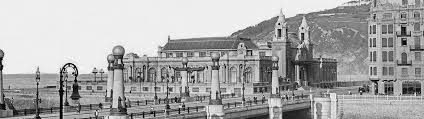
The former Gran Casino Kursaal.
It is no longer a casino, but rather a conference centre and auditorium, and is mainly known for hosting, among other events, the San Sebastián International Film Festival. However, it also hosts concerts, conferences and trade fairs, dance performances, musicals… It is undoubtedly one of the most frequently used buildings in San Sebastian.
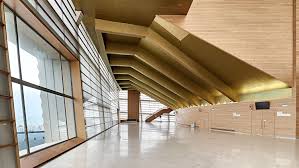
Inside the large cube of the Kursaal.
And although at first almost nobody liked it (among other things because of the inevitable comparisons with the previous building), after 25 years the people of San Sebastian have grown accustomed to it and it is now part of the city’s landscape. If it were to be removed, we would surely miss it, especially at night, when it is lit up in white or with different motifs depending on the time of year.
Modern religious architecture: Church of Iesu
Also designed by Rafael Moneo, this church, inaugurated in 2011, is a minimalist space with pure, straight lines. Although it may initially seem cold due to its materials and lack of sacred art, it is actually a peaceful space, perfect for reflection. Although integrated into a huge cube, the church actually has a cross-shaped nave, which can be seen thanks to the ceiling, through which natural light enters.
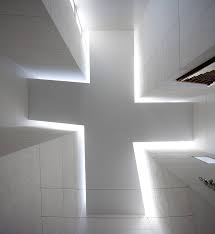
Detail of the cross-shaped ceiling.
It is located at the entrance to the Riberas de Loyola neighbourhood, next to the Jardín de la Memoria (Garden of Remembrance), a green space ideal for a leisurely stroll, far from the chaos that the city centre can sometimes be.
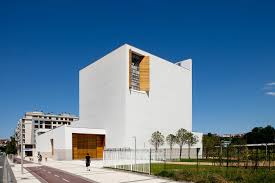
Exterior with the Jardín de la Memoria on the right.
Blending the old and the new: San Telmo Museum
If you like a mix of modern and ancient architecture, the best example of this is the San Telmo Museum in the Old Town. The old building, in Gothic-Renaissance style, was built in the 16th century and expanded in a Neo-Renaissance style in the early 20th century. In the 21st century, it was expanded again after extensive restoration, this time in a modern style, and reopened in 2011.
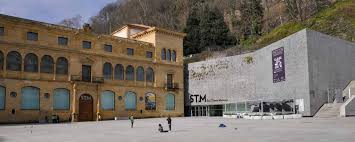
The two façades of the San Telmo Museum.
The new building was designed by Nieto and Sobejano, and its main feature is its narrowness, as the available space was minimal between the old building and Mount Urgull. Even so, the new building houses offices, a library, a multipurpose room, two exhibition halls, a conference room, and a bar-restaurant, as well as serving as the main entrance.
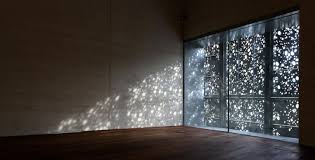
Detail of the interior of the new building.
Another striking feature of the new San Telmo is its façade, designed by artists Leopoldo Ferrán and Agustina Otero. Its holes mimic those found in the mountains of the area, created by the salinity of the air and filled with vegetation. That is why the plants we see here have also arrived naturally and will one day cover the entire wall.
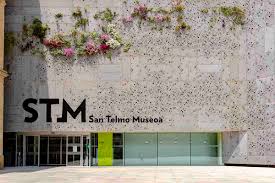
The flowers on the façade in spring.
The most recent: Musikene
If you take our Classic eBike Tour, you will pass by this building, as it is located on the city’s university campus in El Antiguo, a neighbourhood we always visit. It is the headquarters of Musikene, the Higher School of Music of the Basque Country, formerly located in the Miramar Palace.
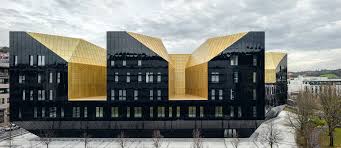
Side façade of Musikene. Photo by Arquitectura Viva.
Musikene is a large black volume in which three incisions reveal a golden interior that reflects light onto the surrounding buildings and leaves no one indifferent, least of all architecture lovers. Designed by GAZ Arquitectos and inaugurated in 2016, it makes the most of the available space, as the building contains not only music classrooms, but also a huge auditorium with capacity for an orchestra and choir and 420 spectators.

Hegoi has been a local guide in Go Local San Sebastian for almost 10 years. A local among tourists, who loves his profession and enjoys showing his hometown. He also plays a key role in the teams of Free Walking Tour and Bike Rental.